Monday, November 30, 2009

Calendars from the past

This morning the oil man came, and I found between the doors not only the bill, but also a 2010 calendar. It got me thinking about my childhood when our house was full of calendars given out by local businesses. I don't ever remember my mother buying one. I'm so happy to still have two of these old calendars with her well-remembered handwriting.

This one came from the drycleaners, in the days when the dry-cleaner man stopped by the house to pick up and deliver the week's cleaning. It had just one little picture glued in at the top with these words beside it. As the months rolled on, there were informational pages for each one.


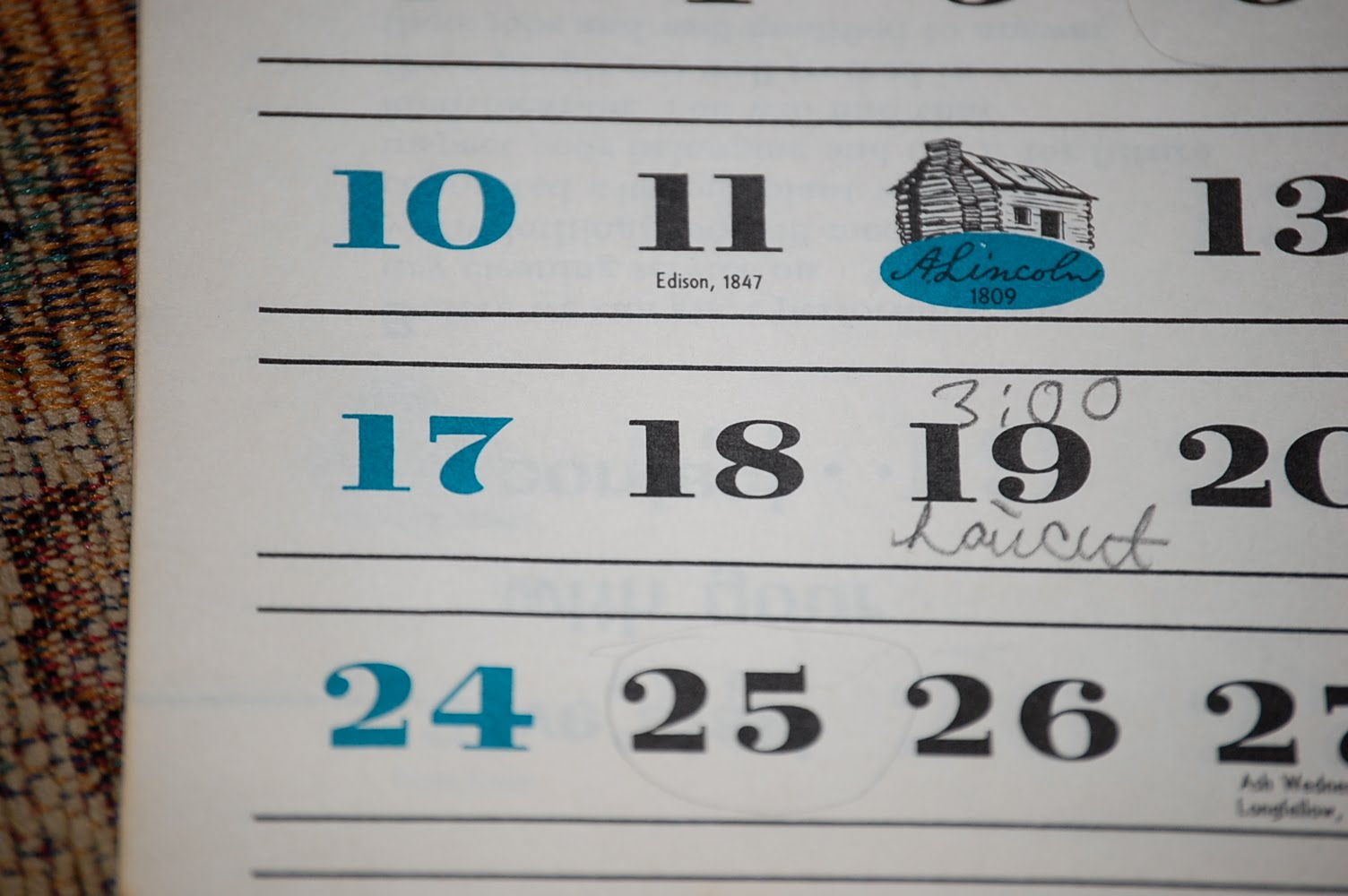
Here's a closeup of the February 1963 page. You may see a faint circle around my 15th birthday, and that I noted an upcoming haircut. It's hard to believe that's my handwriting since I have printed for so many decades now.

And then there were the mostly one-function calendars, like this one which came from the milkman. Those are my mother's words on the side: August 1 - Apron to guild sale.


On these pages were written the deliveries for each day. In this leap year, on the 29th, my mother bought '3 qt m and 1 pt c' - 3 quarts milk and 1 pint cream. And she had just bought 4 quarts of milk and 1 pint of cream two days before. Ah, the days of milk drinking! Well, we still do drink this much but most people don't. Each month had a page of recipes, of course all calling for milk products, along with milk information.

about two thirds of our butter is made from milk produced in months when the cow's feed is largely green grass. This summer butter is extremely rich in Vitamin A value. Its full flavor and food value are retained in refrigerated storage for winter use in every delicious way.


And here's the one which arrived today. Though the photography is modern, it is still quite typical. If you live in New England, you often get a calendar with photographs from each state. This is one thing which hasn't changed much over the years.


Nowadays, this is the only calendar that arrives at our house. For a long, long time I've thrown it out in favor of calendars of English gardens or Irish scenes or dogs or Susan Branch, but this year I'm feeling a little wistful and nostalgic and I think I'll keep it. I'll still put up my Susan Branch calendar by my desk but I think I'll put this one up in the kitchen as a reminder of the days when my kitchen was the heartbeat of my childhood home. The calendar, the wall phone, the memo pad were all together keeping track of milk deliveries, and haircuts, and dropping that apron off at the guild sale.

After I wrote this, I found myself thinking of a post which Beth did. Although it isn't about old calendars, it is about remembrance and family keepsakes. If you haven't already read it, you may find it here. It is really very special.

Sunday, November 29, 2009

The Dogs of Riga by Henning Mankell


54. The Dogs of Riga - second in the Wallander series
by Henning Mankell
mystery, 1992
translated by Laurie Thompson
finished, 11/20/09


Three little things that make me love the books by Henning Mankell:

I love the inclusion of weather. It is a character. It is important. The first words of The Dogs of Riga are:

It started snowing shortly after ten a.m.

I also love a book that says:

It was less than a month since his friend and colleague had died of cancer.

And I love a book that tells you the date when the story begins: February 12, 1991. Let's see, my kids were eight and five on that date. I was thirteen days from turning forty-three years old.

Kurt Wallander is not one of those arrogant, know-it-all policemen. He is not perfect. He makes mistakes and feels remorse about them. In this story, there's an inflatable life-raft that two murdered men were found in. It ends up being stolen from the basement of the police station.

He realized the fatal error he'd made. Nobody had let the air out of the rubber boat, nobody had looked inside. It had not occurred to him to do so. ...Wallander felt embarrassed. How could he have failed to open the raft up? He would have thought of it sooner or later, of course, but he ought to have done it straight away.

And a little further into the story, when he has gone to Latvia:

I'd forgotten that I'm in an alien world.

A measure of real talent in a series writer for me is when the second and further books do not follow a prescribed formula. The Dogs of Riga couldn't be more different from Faceless Killers. Our hero is in a different place, with completely different concerns. We learn more about who he is and his feelings about his home country, Sweden. I am so pleased with Mankell's writing. I feared that I might not enjoy this book as much as the first because the translator is different, but it was just as good, and again, did not feel like a translation.

This book reminds me (as if I needed a reminder) how very little I know about certain parts of the world, like Scandanavia, Eastern Europe, the former Soviet Union. What I know, I learned from Michael Palin in his journey, New Europe. If you are interested, please do visit his website. You may now read this, and all his other books online. There are also wonderful new paperbacks of each journey. And the dvds are at Netflix.

The Dogs of Riga begins two years after the Berlin Wall came down, and because it was actually written in that time, there is an immediacy to the story that is makes it very exciting.

The life-raft I mentioned is the catalyst for bringing Kurt Wallander to Latvia. There he finds a world in tumult. Just as in all the Cold War spy stories the setting is dismal, the people duplicitous, the gap between rich and poor huge. He ponders the conditions there, and thinks a lot about his own country.

This is Sweden, he'd thought. Everything is so bright and cheerful on the surface, our airports are built so that no dust or shadows could ever intrude. Everything is visible, nothing is any different from what it seems to be. Our national aspiration, our religion, is that security is written into the Swedish constitution, which informs the whole world that starving to death is a crime. But we don't talk to strangers unless we have to, because anything unfamiliar can cause us harm, dirty our floors and dim our neon lights. We never built an empire and so we've never had to watch one collapse, but we persuaded ourselves that we'd created the best of all possible worlds, and that even if small, we were the privileged keepers of paradise.

Whew! I look forward to seeing if, and/or how, this opinion changes over the course of the series.

The 'dogs'in the title are symbolic; they are a metaphor for the spies who are everywhere. Who may he trust? Who is telling the truth? What is the truth?

I so enjoyed this book. I liked learning about this time and place in history. I am fascinated by the character of Kurt Wallander. I love this series.

Addendum: you may read about present-day Riga here.

Saturday, November 28, 2009

My gggenerator!


As almost always happens if it snows a lot or the wind blows hard, we lost power about 8 pm last night, but this time we were prepared! After our last power outage, we finally bought a generator. The extension cords come in the window and one goes down cellar to the freezer and another goes to the refrigerator. And the nifty thing about the refrigerator one is that occasionally we can unplug it for a little while, and use that power for the television or for the computer. That's why you've seen three posts from me this morning. We've always been fortunate in that we have a spring which means we have water when the electricity is off, and the woodstove to keep us warm, but now we also have the sweet, sweet hum of the generator that is keeping our food cold and safe.


And because the song is now in your heads:

Quote du jour/Michael

We sent pictures of the snow via cell phone to our son Michael who is visiting friends in Chicago, and this is his text back to us:

I rreeeeeeallly hope the snow stays and we don't see rain again til spring! can't wait to ride!! [he is referring to snowboarding]

Mrs Bale finally has something to say!

Although we had a little snow back in October, there hasn't been any since - until yesterday!! It snowed and snowed and snowed.

4 pm
5 pm
Happy dogs!

Friday, November 27, 2009

At this moment


You may find out what 'At this moment' is at the first posting, and the others may be found under 'Letter Topics' on the sidebar. If you are so inclined, please join me in this little exercise in awareness.

What I see: Sadie lying where the Christmas tree will be in a short time. Sooty sleeping. Ben is just beside me as I sit in the reading chair which was 'Today's picture.'

What I hear: a slight crackling of the wood stove, the furnace running, and the sound of the humidifier.

What I smell: a faint reminder of the IHOP French toast I made this morning.

What I taste: that French toast.

What I feel: warm and cozy, and happily immersed in my Agatha Chrisie book, Hercule Poirot's Christmas.

Today's picture/reading chair

Just the place to be on a cool, rainy, dark November day after Thanksgiving.

Wednesday, November 25, 2009

Back in Your Own Backyard

Vera Lynn's version of Back in Your Own Backyard written by Al Jolson, Billy Rose, and Dave Dreyer. It seems so appropriate for Thanksgiving.

Tuesday, November 24, 2009

Appreciation and Giving Thanks

I haven't written about it in these letters, but I love the Anne Tyler book, Back When We Were Grownups. I own the audiotapes and listen almost every year. I find it warm and kind and instructive and heartening. Anyway, as we approach Thanksgiving here in the US, I'm reminded of Poppy's words near the end of the book. He is a man who has just celebrated his 100th birthday, and he speaks of all the joys of his day. He starts at the very beginning and continues on. Each time I read it, I am struck by the wonder of this passage. Do any of us consciously do this at the end of the day? Wouldn't it be awesome and life-changing if we did?

From the very start of the day, it's been perfect. Sunshine on my bedspread when I opened my eyes; radiators coming on all dusty-smelling and cozy. Waffles for breakfast, that puffy kind that are light inside but crispy outside, and one-hundred-percent maple syrup heated first in the microwave and then poured over in a pool and left a moment to soak, so the waffles swell and turn spongy and every crumb of them is sopping with that toasty, nutty flavor...

He goes on to talk about his morning shave, and the game of solitaire:

The best thing about solitaire is, it's so solitary. You're allowed to think these aimless thoughts and nobody asks what you're up to.

And his lunch which was just what he requested:

A peanut butter and jelly sandwich on whole wheat. ... There's something so satisfactory about a p.b.j. done right.

He continues on through naptime:

... cool white sheets that warmed as they got used to you.

dressing for his party, the candles on his cake, and at almost the end of the book he concludes with the frosting:

... the icing was my favorite: fondant. It melted in my mouth. I held a bite in my mouth and it sat for just a second and then trickled, trickled down my throat, all that melting sweetness.

Much as the sweetness of life, I think.

And now, Bing Crosby singing to Rosemary Clooney in White Christmas.

Quote du jour/James Beard

Good bread is the most fundamentally satisfying of all foods; and good bread with fresh butter, the greatest of feasts.
James Beard

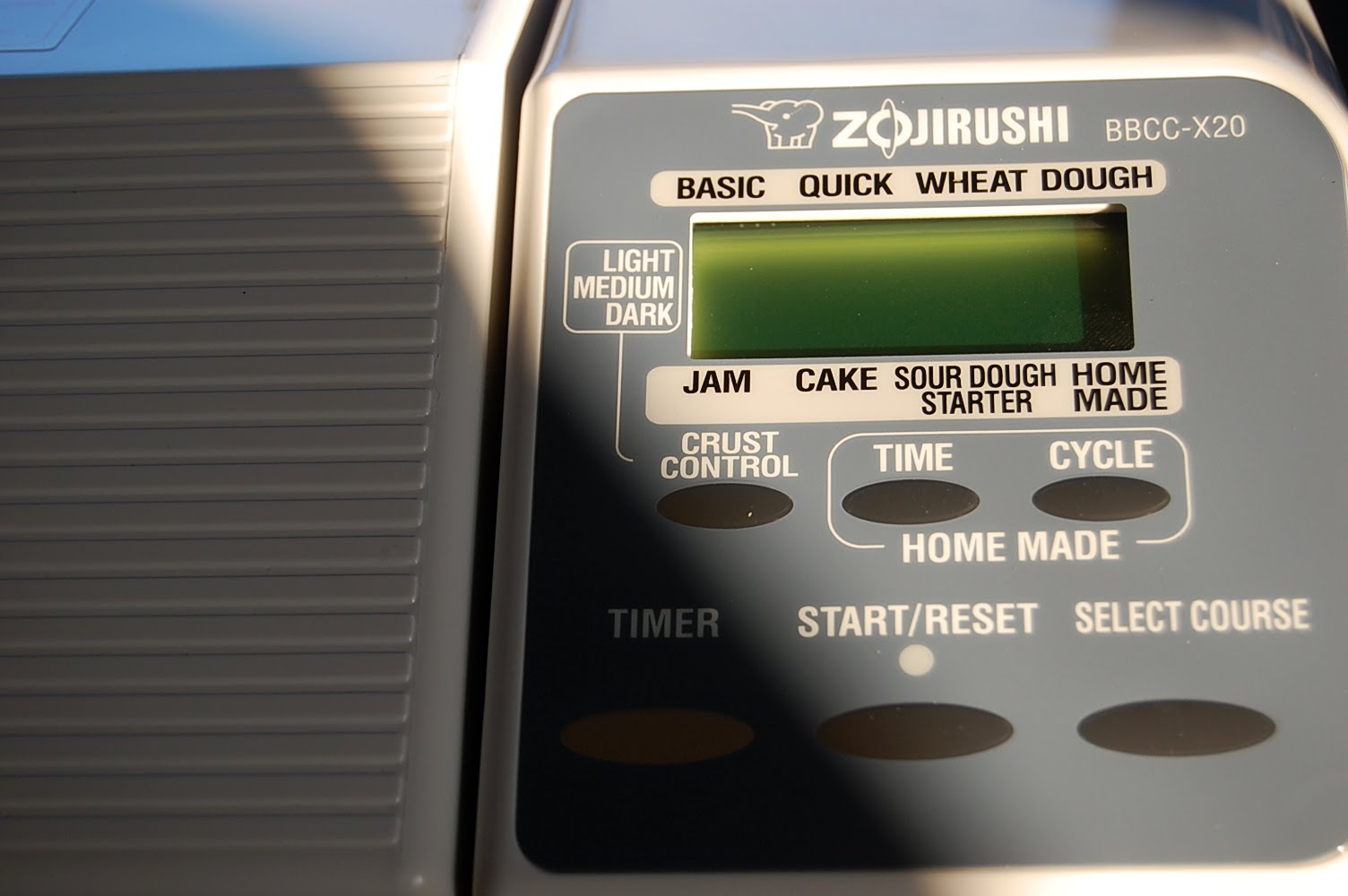
Here are the results of the first loaf made in the new bread machine. We couldn't be more pleased. The loaf is now finished, and tonight we'll try the little program button to have fresh, warm bread tomorrow morning.


Monday, November 23, 2009

Tomato Mozzarella Salad


Slice tomatoes. Slice mozzarella and put on top of tomatoes. Add coarsely chopped fresh basil. Pour olive oil on top and sprinkle on some black pepper. Tom loved this!

Sunday, November 22, 2009

Blog anniversary

On this day, the third anniversary of writing Letters from a Hill Farm, I found I didn't really have much to say. Last year kind of said it all. Mostly, things are the same with a few little changes like consolidating my 'letter topics.' But it hasn't really changed much since I began. I'm not a 'book blogger' or a 'food blogger' or a 'garden blogger.' I just write my letters. I'm still spending my time writing book reports or posting recipes or poems or quotes or music. Occasionally Mrs Bale pops in when there is something interesting in the 'Irish Sea' - oops I mean northern New England. The thing I love the very most is connecting with all of you. I love your comments and your emails. I'm so pleased when you take time out of your busy day to say hi, or recommend a book, or tell me you love the music or the recipe. Blogging has brought me incredible joy and knowledge. I thank each of you.

Quite coincidentally, I got myself a present today.


After years and years of making my own bread, I am buying a bread machine. When I first started, not only did I knead by hand, but we had a grain grinder which we cranked ourselves. Imagine that! Then I got an electric grain grinder. Then I just started buying whole wheat flour. Then I started using my Kitchen Aid for bread. And now the time seems right to go on to the next 'new thing.' Even though bread machines have been around for a while, I've scoffed. I've thought 'this isn't real.' I've gone on in my old way. But you know what? For a while now I haven't been satisfied. The dough hook chipped. We got a new one, and that chipped. So then I just used the paddle attachment, but it isn't great. The dough gets all caught up in it and doesn't really mix well. As a consequence of this, and whatever other cosmic stuff goes into bread making, my bread hasn't been delicious. And then there is the storage problem. I've tried the refrigerator. I've tried a bread box with the bread in plastic bags and then not in plastic bags. I've tried plastic bags out on the counter. I've tried paper bags out on the counter. The bread just doesn't keep that well. And now that the kids are grown, the bread doesn't get eaten so quickly. I don't like to make just one loaf since a fair bit of my day is spent doing so. With the machine, one loaf is made at a time so it will be eaten more promptly. So all these things factor into my decision. I've read that I can put in the ingredients, and set some kind of magical button so there will be fresh, warm bread in the morning. Can that really be? Are there little bread-elves that will do this for me?

I'll write again with a progress report. I'm hopeful and excited. Any wisdom or advice is most welcome.

There will be a giveaway at a less busy time of the year. Nothing huge, but just a little thank you for being such wonderful readers.

Saturday, November 21, 2009

Olivia in India by O. Douglas


53. Olivia in India
by O. Douglas
fiction, 1912
finished, 11/11/09


This was O. Douglas' first book, and it felt very much like an autobiography. I couldn't help but believe that this young woman did actually go visit her brother in India. The book is technically an epistolary novel, though the letters are often very long, and so filled with detail and lack of attention to the recipient that I often forgot I was reading letters. She is writing to a close friend of her brother's. They have become friends, too, and the reader wonders occasionally if they might be in love (and finds out in the end). I've read about India in the tremendous autobiographical trilogy by M.M. Kaye: The Sun in the Morning, Golden Afternoon, and Enchanted Evening. 'Her' India was simply magical. It was her home and her life for a long time. She loved it deeply and the books come alive with details and stories. Our Olivia is just a visitor escaping Britain's cold and dreary weather. She does end up staying for months, but it is still mostly a tourist's view, though at the end she does get a bit philosophical about the country:

I don't know if I am horribly sorry to go or profoundly relieved to get away. There is no doubt it is a sudden and dangerous country. Three people we knew have died suddenly of cholera, and two others have had bombs thrown at them.

Off and on during my reading I was a little bored. Though I do enjoy reading accounts of travels, and even looking at friends' travel pictures, I got a little tired of Olivia's observations. Though I wasn't wild about the book, I still found the gentle kindness that is O. Douglas' trademark. And it wasn't bad for a first effort. It just felt like a sort of 'practice' book that may have worked better as a family literary album rather than a published book. In fact, Olivia is writing a book on the Mutiny in India and we read of her concerns about being a writer.

So, not a very interesting book report, but honestly this is the best I can do with a book that didn't thrill me, and which I can barely remember after finishing it only ten days ago. You may read much higher praise of O. Douglas here and here.

Friday, November 20, 2009

Today's poem - A Letter from Home by Mary Oliver


A Letter from Home
by Mary Oliver
from New and Selected Poems Volume One

She sends me news of bluejays, frost,
Of stars and now the harvest moon
That rides above the stricken hills.
Lightly, she speaks of cold, of pain,
And lists what is already lost.
Here where my life seems hard and slow,
I read of glowing melons piled
Beside the door, and baskets filled
With fennel, rosemary and dill,
While all she could not gather in
Or hide in leaves, grow black and falls.
Here where my life seems hard and strange,
I read her wild excitement when
Stars climb, frost comes, and bluejays sing.
The broken year will make no change
Upon her wise and whirling heart; -
She knows how people always plan
To live their lives, and never do.
She will not tell me if she cries.

I touch the crosses by her name;
I fold the pages as I rise,
And tip the envelope, from which
Drift scraps of borage, woodbine, rue.

Wednesday, November 18, 2009

Spinach Bread


Spinach Bread

Mix together:
1 cup flour
1 teaspoon salt
1 teaspoon baking powder
1 teaspoon sugar

In a separate bowl:
Beat 3 eggs
Add 1 cup milk, and beat.


Add egg mix to flour mix.
Add fresh or frozen spinach and grated cheese.
Amounts of spinach and cheese are up to you.
Mix together well, and place in greased 9 x 13 pan.

Bake in preheated 350º oven for about 35 minutes.

As you may know by now, I don't care for cheese, but this is a big hit with Tom!

Mrs. Malory's Shortest Journey by Hazel Holt


52. Mrs. Malory's Shortest Journey (British title - The Shortest Journey) - third in the Mrs. Malory series
by Hazel Holt
mystery, 1992
finished, 11/1/09

Ah, how nice to be back in the company of Sheila Malory. She is such a homey, comfortable person, one you might long for as a friend or neighbor. She truly cares about her friends, and those who are in need of company. In this book, she is spending time with two particular women, both friends of her late mother, who are in a nursing home. Hazel Holt writes of a situation we all face sooner or later.

Mrs. Jankiewicz and Mrs. Rossiter were almost the last of Mother's friends - so many others had died - and when they were gone yet more links with my past would be broken; one day soon there would be no one who still thought of me as a child.

A character who often appears in these books is a friend of Sheila's called Rosemary. She has a harridan of a mother who is demanding, puts unjustified guilt on her daughter, and is just plain selfish. In Mrs. Malory's Shortest Journey, we find that Mrs. Rossiter's children are the equal to Rosemary's mother. Sheila reflects on this:

I stood for a moment pondering on the unfairness of life that gave Rosemary a mother like Mrs. Dudley and Thelma one like Mrs. Rossiter.

The mystery in the story is that Mrs. Rossiter disappears from the nursing home. There is a lot of speculation because of an odd will which involves her dying sister and her. The solution is very satisfying, and was for me quite unexpected.

I don't read this series for the mystery element. I read it because I want to spend time with kind, generous Sheila and her animals, in her lovely town. I'm buying all the books in the hope of reading them over and over. They do me good, just as does a visit with a friend. If you haven't made her acquaintance, I'd like to introduce you. The books are listed in order here with alternate titles.

Tuesday, November 17, 2009

Teaser Tuesdays/The Dogs of Riga


Teaser Tuesdays is a weekly bookish meme, hosted by MizB. Anyone can play along! Just do the following:

Grab your current read.
Open to a random page.
Share two (2) “teaser” sentences from somewhere on that page.
BE CAREFUL NOT TO INCLUDE SPOILERS! (make sure that what you share doesn’t give too much away! You don’t want to ruin the book for others!).
Share the title & author, too, so that other TT participants can add the book to their TBR Lists if they like your teasers!

Page 34 - The Dogs of Riga by Henning Mankell:

It had become more difficult to be a police officer. They were living at a time characterised by a sort of criminality that nobody had experienced before.

It Ain't All About the Cookin' by Paula Deen


51. It Ain't All About the Cookin'
by Paula Deen and Sherry Suib Cohen
nonfiction, 2007
library audio cd
abridged audio read by the author
finished, 10/29/09


I've only seen Paula Deen's cooking show maybe three times, but I found her so delightful that when I saw this audiobook at the library, I thought I'd like to read it. The bonus is that she is the narrator. I had read somewhere that she went through a long period of agoraphobia when she didn't like to leave her house. This is only one facet of her life which she has decided to share. She wondered about doing such a book because she didn't want to disappoint her fans who love her.

This excerpt (scroll down the page a bit) from the beginning of the book will tell you more than I can ever write in a book report. I didn't find out until after I listened that it was abridged, but it doesn't seem to matter. Her story moved along just fine. I really enjoyed getting to know Paula, and by the end of the book she felt like a new friend.

Monday, November 16, 2009

The Return of the Soldier by Rebecca West


50. The Return of the Soldier
by Rebecca West
fiction, 1918
library book
finished, 10/26/09


After I read Thomas' review of this short novel, I wanted to read it immediately. What an amazing story. West's writing reminded me of Virginia Woolf's just a little; her descriptions of the outdoor and indoor scenes; the way in which what someone says shows the reader what kind of person she is. In fact, the very first words of the book set up the character, Kitty for us:

"Ah, don't begin to fuss!' wailed Kitty; "if a woman began to worry in these days because her husband hadn't written to her for a fortnight! Besides, if he'd been anywhere interesting, anywhere the fighting was really hot, he'd have found some way of telling me instead of just leaving it as 'Somewhere in France.' He'll be all right."

Well, not the sort of person I'd want waiting for my return!

The narrator is the other woman living in the house, Captain Baldry's cousin, Jenny. It is quite obvious that she is the one who truly loves the man.

I wanted to snatch my cousin Christopher from the wars and seal him in this green pleasantness his wife and I now looked upon.

This 'green pleasantness' is just the sort of British country home one dreams of. Beautiful grounds and beautiful house which Chris himself (his hired workers) had rebuilt after his marriage to Kitty, and before the war. And this rebuilding features strongly in the book. For Christopher comes home from the war with no memory of the past fifteen years. He no longer recognizes his 'new' home. He has no memory of his marriage or of the death of his young son.

The way the two women hear the news of his problem is puzzling and upsetting. A perfect stranger, Mrs. William Grey, arrives from 'the red suburban stain which fouls the fields three miles nearer London than Harrow-Weald.' She tells them that Christopher is 'hurt.' The women at first think she is lying. How would she know of the situation when they haven't heard from the War Office? It turns out that she received a telegram from a hospitalized Christopher, addressed to her maiden name and sent to her old home. She says that they knew one another fifteen years ago, and she has neither seen nor heard from him since.

And there our story really begins. We learn about his fifteen-year old memories. We meet a doctor who has a plan to 'cure' him, and we are presented with the ethics of the whole situation. I was completely involved in the book. I was fascinated by each of the people, and how they reacted to the ordeal they had to cope with. The use of 'modern' psychology is particularly interesting. The Return of the Soldier is beautifully written and gives the reader a lot to think about.

Thursday, November 12, 2009

Death of a Maid by M.C. Beaton


49. Death of a Maid - twenty-third in the Hamish Macbeth series
by M.C. Beaton
mystery, 2007
library audiotape
unabridged audio read by Graeme Malcolm
finished, 10/25/09


I haven't visited with my fictional friend, Hamish Macbeth in a few years. In the spring of 1999, I read the first fourteen (skipping the third because it didn't sound appealing) of these mysteries set in Scotland. I read one right after another, and though they aren't brilliant literary works, they do offer a cozy familiarity that gives great pleasure to this reader. I read one other entry in 2004, but there are still quite a few I haven't read. Recently I came upon an audio version of No. 23 in the series at my local library, and I thought it would be fun to check in with Hamish and see what he was up to.

I do not have a 'maid' or a 'cleaning lady' but I know a few women who do. I've always wondered about the idea of having a perfect stranger (in most cases - especially if you don't live in a small area) come into one's home when no one is there. How could that person resist reading a note left on the fridge from a wife to her husband. 'Don't bother coming home tonight; we are done!' And what about the opposite - a little love note left on a pillow by an adoring spouse? What about the bills that are right out on the desk that must be dusted? Oh, the possibilities for gossip, or worse, blackmail. I know, I know, I live too much in mystery stories and detective shows on television, but honestly how many people wouldn't pry, either on purpose or inadvertantly, as they go about their cleaning?

And this is the premise of Death of a Maid. The maid works for a number of people, and 'collects' their secrets. When she is found dead, there are any number of suspects. This was a very good mystery, and such a nice surprise to see that after twenty-two books in a series, the twenty-third is really quite interesting. Hamish is the local constable of Lochdubh, and is still a happy fellow, living in his police station. He likes working in his small village, and the dread of his life is that he will be 'promoted' to another place. I'll probably seek out some of the others I've missed in the intervening years.