Showing posts with label Farm and Garden Report - 2016. Show all posts

Monday, November 7, 2016

Feeding the birds again

Three years ago next month I wrote a post about our decision to stop feeding the birds. You may read it here.

Since then we have greeted two falls and two winters without bird feeders. In the meantime the big maple out front was cut down, and we had extensive logging done in the woods. Our old dog Sadie died, and we got a new pup Lucy. These things all changed the bird and animal population at Windy Poplars Farm. The deer haven't been close to the house, nor have moose or bear. We've heard coyotes less frequently. The birds have been around in the summertime, but the winters have been very quiet.

This fall we thought that we might begin feeding again. Lucy is a loveable Labrador without a mean bone in her body, but she does her fair share of barking when she smells something in the air. We think her presence may be enough to keep the wild animals away.

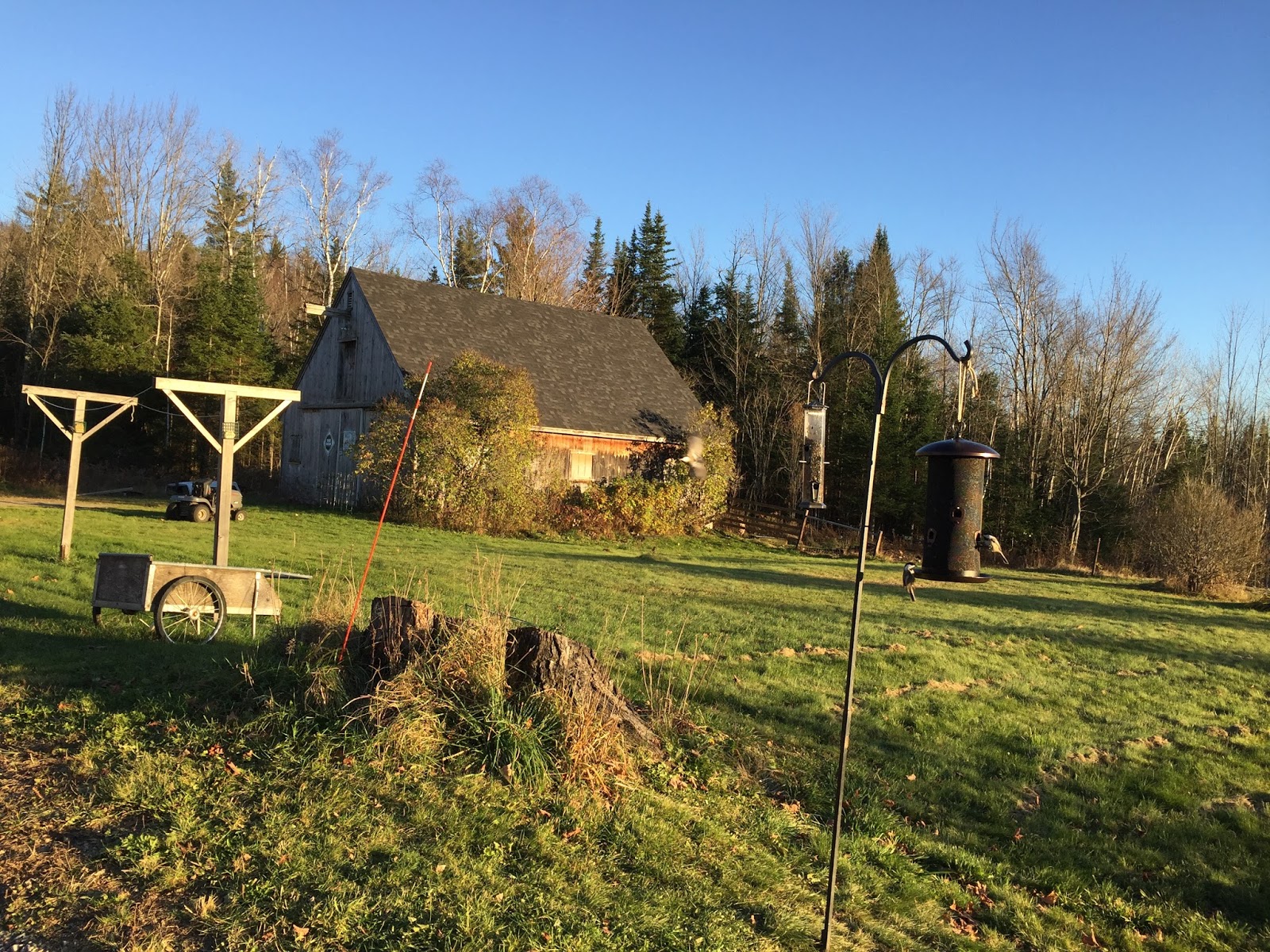
So, we put up the feeders about three weeks ago, and what a joy it is to have the birds back. The sweet voices of the finches, both red and yellow, the cheerful chickadees, the pretty juncos, the colorful woodpeckers, and even the raucous bluejays are so very welcome. We put up two feeders, and two suet holders on the clothesline poles.


We see the birds out the kitchen window. It has been especially fun watching with Hazel. 

Tuesday, October 25, 2016

In a week's time

If you've been to visit in the last week, you will have seen this photo as the blog header.


Today I took a picture of the same view, and it is now the blog header. Seven days and such a change. We're now in the second month of fall, the Scorpio month, when the leaves all depart the trees, the first snows come, and the darkness comes earlier and earlier in the evening. I love all phases of the autumn. Each one has its own particular beauty.

Tuesday, October 4, 2016

Autumn Colors at Windy Poplars Farm

Peak foliage color here is almost always the end of September, beginning of October. It takes my breath away every single year. I feel so lucky that I don't have to travel to see it. I don't even need to leave my home. It is all around me every day and I look, and look, and look and can't believe such beauty.

I took these pictures at a couple different times today - afternoon and early evening. I've never seen any photos, even in magazines, that can completely capture the colors, but these will at least give you an idea.


And while I was taking some pictures down here, Tom had taken Lucy for a wheeler ride up into the woods, and he took this photo


My first panorama shot


Sunday, August 14, 2016

Rust isn't only on cars

The last time I grew hollyhocks was four summers ago. If you type hollyhocks into the search bar, you may see them. When we decided on the new garden this year, I wanted to plant them again. We started the seeds inside and they were a good size when we put them outdoors. For a while the plants were a lush green and very healthy. They got tall and the buds looked great in this picture from July 30.


but the leaves had these odd little spots.


You might think, oh, those aren't so bad, but these were the leaves which were just beginning to be infected. Here are the leaves which were in worse condition.


And now, a couple weeks later


Even the buds are affected


But amidst all this ugliness, the hollyhock flowers continue to open and bloom and look as beautiful as any prizewinner, as long as you focus on just them!


When the problem first appeared I searched online and found a very informative site.

Puccinia malvacearum, the rust fungus that infects hollyhock, causes yellow spots on the upper leaf surface, and orange-brown raised pustules on the lower leaf surface.   Wet conditions promote infection by the rust fungus. The lower leaves typically show symptoms first, and the disease slowly progresses to upper leaves over the summer. Infected leaves eventually turn brown, wilt, and die. Wind and splashing rain help spread the spores of the fungus, so spacing plants to promote good air circulation can help slow the progression of the disease. Because wet conditions favor infection, water the soil around the plants rather than wetting the leaves with overhead irrigation if possible.

I grew them in the corner of the fence, and they were too crowded. Four years ago, they were out in the other garden with plenty of airflow. I did have a big problem with Japanese beetles but no rust. This year there have been very few of them around anywhere. Funny how bugs go in cycles.

So I plan to clean up very well, and next year I won't grow them in the same place again. I'll give them lots of space and will water from below. 

And I wanted to note that the mallow was also affected by rust. Hollyhock and mallow belong to the same family malvaceae. 

When I mentioned in the post about the new garden that I had a whole blog entry planned on hollyhocks, both Lisa and Stephanie commented that they have a terrible time with rust, so here's hoping these tips will help all of us! Stay tuned to see if next summer's hollyhocks are rust free.

Sunday, August 7, 2016

Garden and fence, part 2

In March I wrote about our new garden and fence scheme. I've been meaning to continue the story, and show the final result of the plan for ages.

This is the day that Tom began the work, March 31. Lucy had no idea how her yard was going to change!


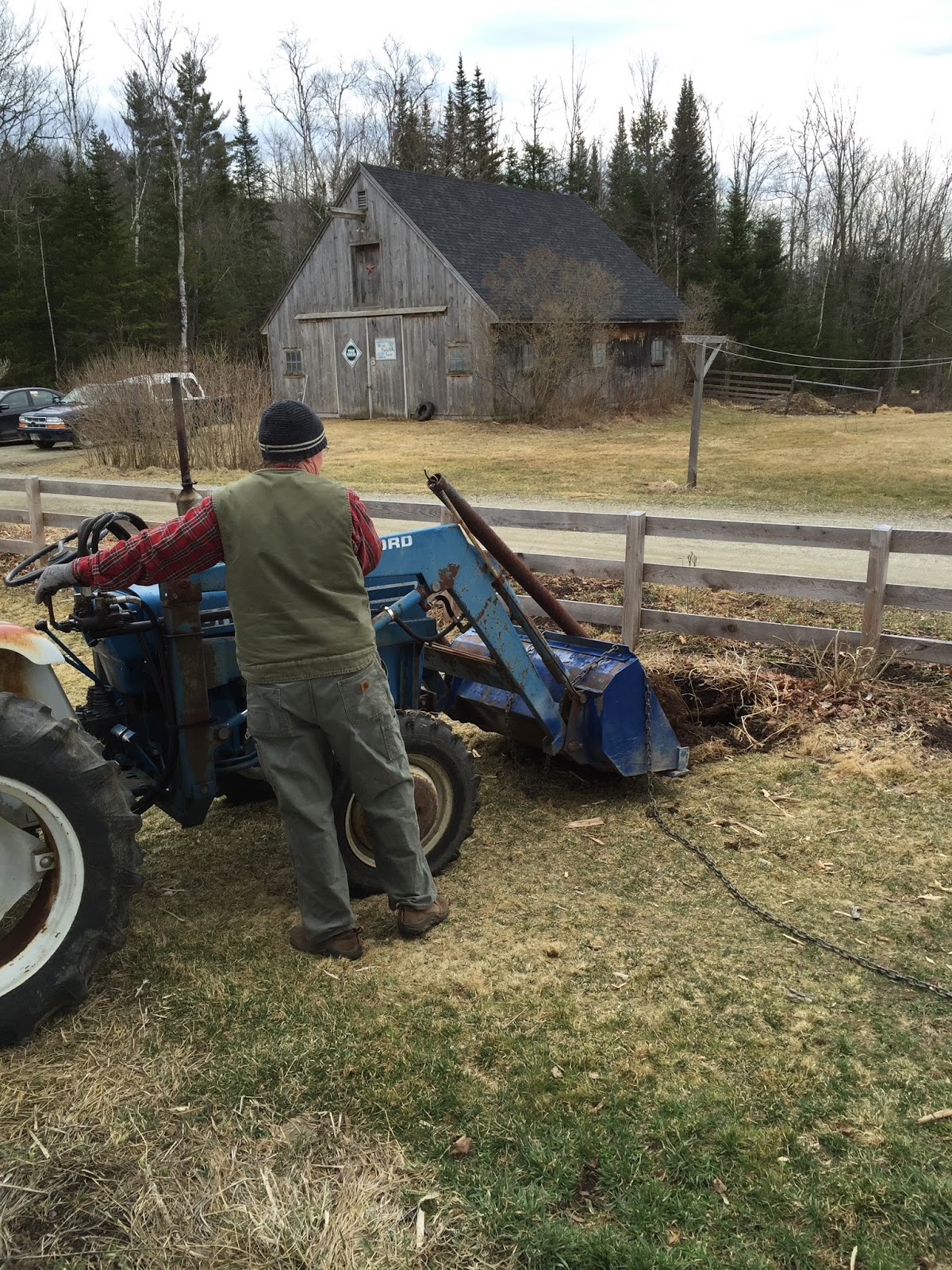
The first job was to remove the old lamp post which was here when we bought the house in 1981. First he turned off the electricity, and then cut the wire where it went into the house. He took off the top part and then it was time for the tractor.

He pulled and pushed the post.


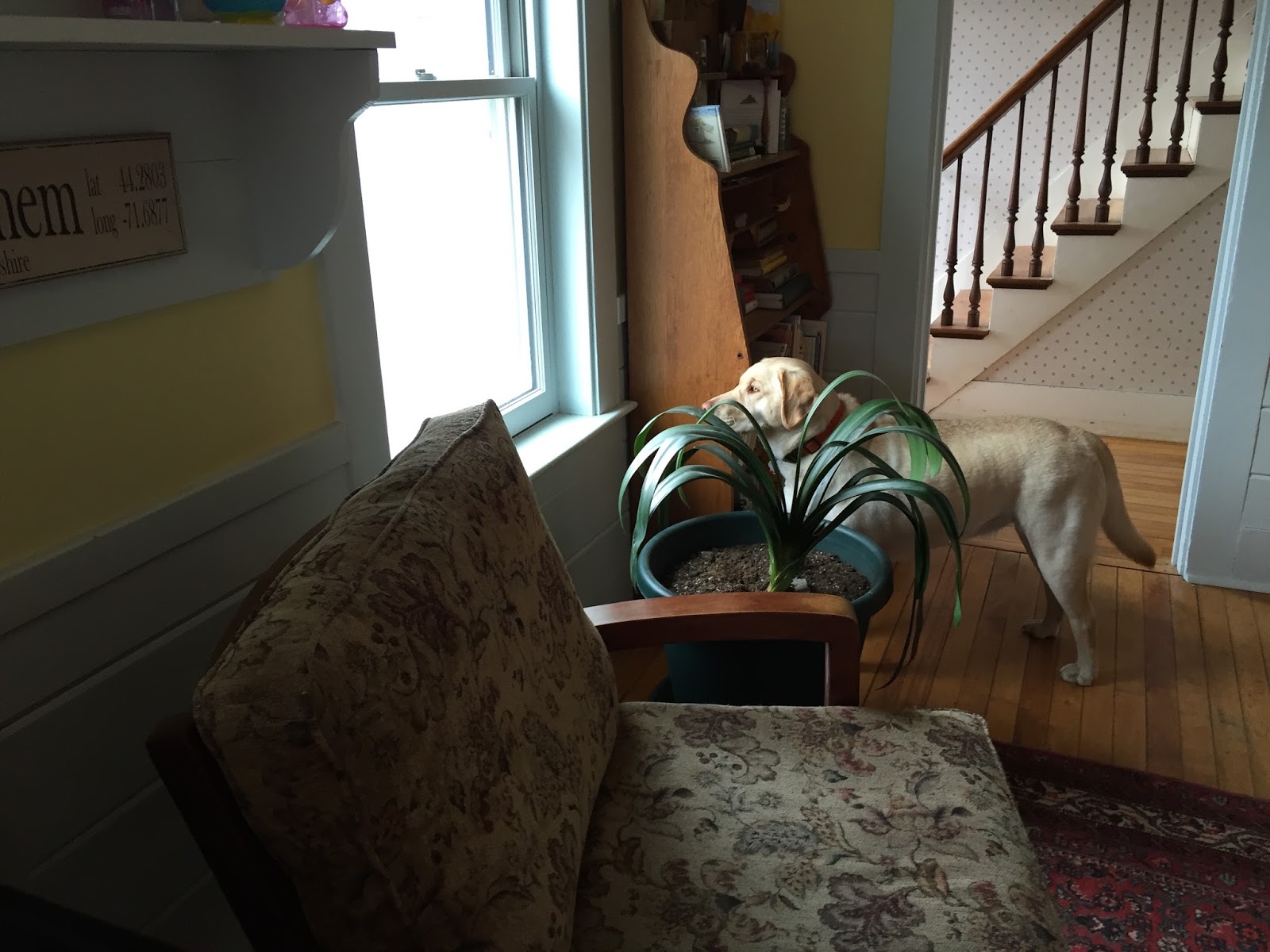
And while Lucy watched from inside,


The post was finally out of the ground and over the fence.


This is what it looked like.


Don't all farm girls dress like this?!


The next step in the making of the new garden was planting the seeds.
April 11


And a whole tray full of hollyhocks.


And a few weeks later on May 1


On April 16, Tom took down the fence that was in front, moved it to the side, and dug up the lawn with the tractor bucket. And then relaxed.

(taken through the screen so not clear)


By April 19, when Hazel Nina came for the day, Tom had used the tractor to put manure on the old lawn, and we experienced for the first time the joy we knew we would feel at being able to go into the house without being accompanied by the exuberant Miss Lucy. What a difference this little change has made in our stress levels! Now anyone can come, and we just let Lucy out the kitchen door, and people can come right in the front door. 


This was the chief reason for the change, and the bonus reason has been a lovely garden right next to the patio.

Most of these daylilies were already there, growing on both sides of the fence. Now it is just an open space of daylilies. One evening a chicken crossed the road to check out the new garden.


The only new ones were the ones I bought in honor of Indy Thomas and actually planted on his brother's birthday, May 6
Indy Charmer and Indy Electrified 


The Indy Charmer bloomed this year right around the day of Indy's first birthday!


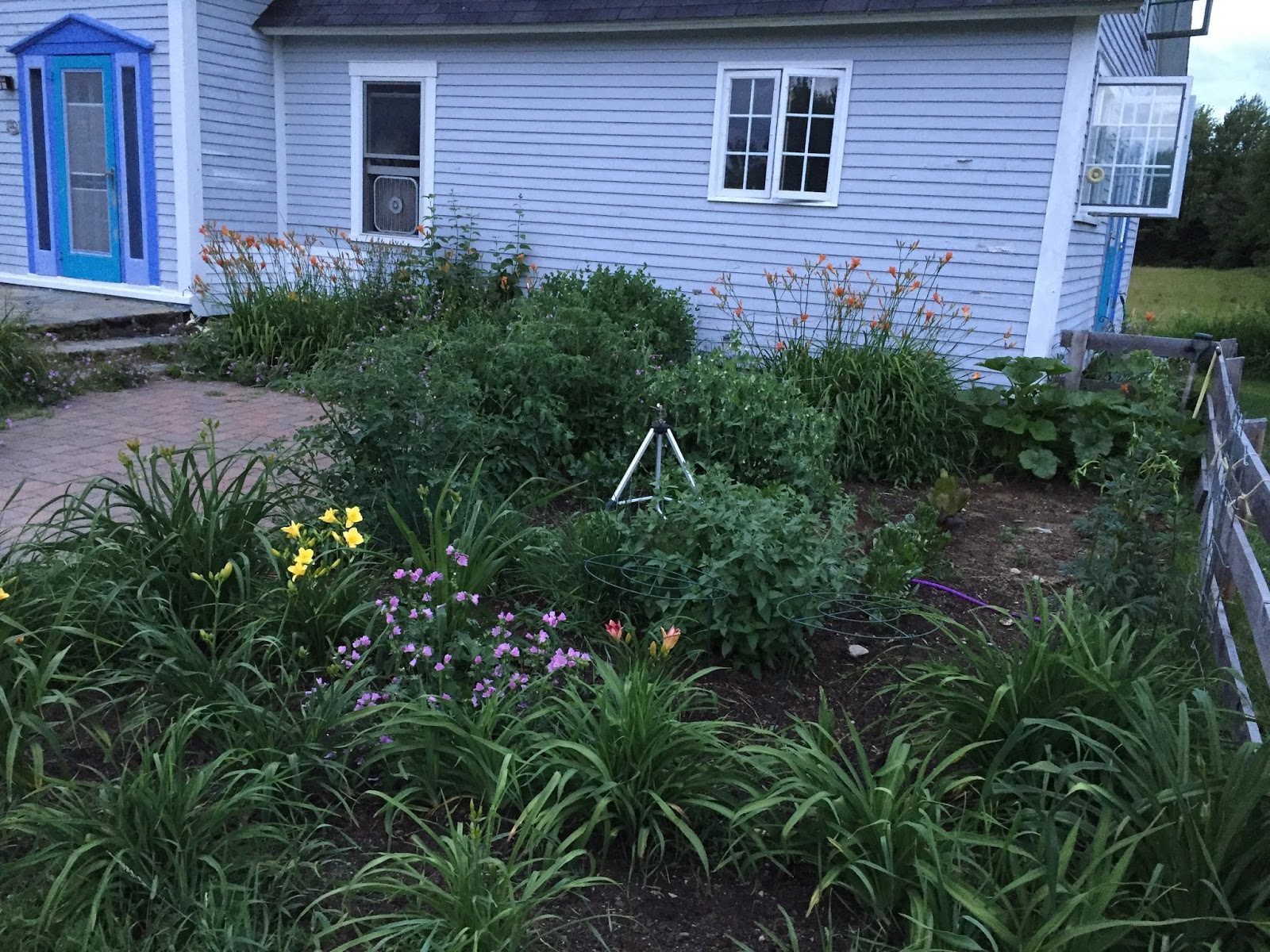
An evening view of the garden on July 8


July 16


The hollyhocks in the corner (a whole post on them is coming up soon)


July 26


And here's a view on July 30 from the same perspective as the first picture in this (very long!) post.


Tom and I just couldn't be happier with this garden. I love the flowers and vegetables mixed together. I love the size and the location. We've had peas, chives, basil, lettuce, and parsley for weeks. The tomatoes I showed you the other day have turned color and they are delicious. The yellow beans, which Hazel planted all by herself, are flowering. One day, for some reason I can't remember, I walked outside with a potato in my hand. Hazel and her parents were in the garden, and Hazel asked if it was going to be planted, so I cut it up, and planted it and by gosh it has come up! I don't know if there is enough growing season left for us to get potatoes, but it was still so much fun that she had this idea and it worked.
Sunday, July 24, 2016

"See how fast the summer passes by"

The post title comes from Vashti Bunyan's Swallow Song which you may listen to here.

I've spent some time in the garden today, doing that most melancholy of summer gardening chores - removing spent plants.

The peas are done. We got three excellent meals from the few plants we put in. Is that worth it? We think so. Those peas, fresh out of the garden, cooked a very few minutes and then dotted with butter make one of life's sublime foods. If I can have eat them three times a year, that's enough to hold the memory until next year's crop. No peas in the store, frozen or fresh can compare.

You may see them in the garden on July 8 - in front of those orange daylilies.


And the first picking on July 14.


Another plant I cut down today was the mallow. I've mentioned before in my letters that I grow mallows because my mother told me they grew in front of the chicken house on the farm where she grew up. I knew as soon as I had my own farm that I would plant them. I think some view them as weeds, but I find them a lovely addition to the garden. They self-seed all over, which is a bonus.

They were the queens of the garden on July 1, and for two weeks afterward.


Today they looked like this. Blurry, but you get the idea.


Though the mallow, and also the aquilegia


look terrible after blossoming, there are some plants that look almost as good when they aren't in bloom. I think both the Baptisia australis (blue wild indigo) and peony plant are lovely in the height of summer when their blooms are long gone.


Though it was sad cutting down and pulling out the dead plants, I was cheered by beautiful daylilies which are still going strong.

We've been so lucky with rain. There was a dry spell for a couple weeks, but since then, we've gotten at least an inch of rain a week.

Most of the nesting is over. I still see a few phoebes, the crow family, a wren, and an occasional robin. The cedar waxwings stop by to eat some honeysuckle berries, and the turkeys stroll by with their almost full-grown babies, but the songs are done. It makes me feel wistful, but I look forward to spring next year when the beauty and birdsong begin all over again.