Monday, July 9, 2012

Midnight in Peking by Paul French


31. Midnight in Peking: How the Murder of a Young Englishwoman Haunted the Last Days of Old China
by Paul French
nonfiction, 2012
sixth book for the Dewey Decimal Challenge 2012
finished 6/1/12


You may have come upon those markers on roadsides which pay tribute to someone who has died there. I usually see a cross, and flowers in season. Unconsciously, I put my hand to my heart, and feel such sadness for the person's family and friends, the ones who put up the memorial.

Well, this book feels like one of those markers. The author didn't know the young woman who died, but with this book he is memorializing her. Before Midnight in Peking, there weren't many people who had been thinking about Pamela Werner since she was murdered in January 1937. Now that has been remedied. Now we know, we remember, we care. That's just what the author set out to do.

I first heard of the book on the Diane Rehm show in April, a show you may listen to here. I went right to Barnes & Noble online and ordered it. This is an exceptional story, told in an interesting, most engaging way. It isn't an easy book to read, but it is excellent nonetheless. I can't praise it highly enough.

I came upon this video on the website for the book. How wonderful that we can hear the author tell of his book while walking in the very area where it took place.

Saturday, July 7, 2012

Today's song/Vicksburg Stomp - Hot Tuna

We saw Hot Tuna last night with Michael and his girlfriend. The tour schedule is here. If they're in your area, try to go. They are just fantastic!

Thursday, July 5, 2012

Today's short story - War Memorial by Elisabeth Grace Foley

I found myself thinking this morning that ebooks are a little like the magazines of the past which used to include short fiction within their pages. The reader is able to buy one short story for under a dollar, and get to know a new author. War Memorial is a wonderful story that would have easily been accepted by the magazines of yore, probably for the July 4 issue, or the November 11 issue.

This is a story of how meeting 'the enemy' face-to-face changes a person's view on war. In this case it isn't soldiers, but a soldier and a sixteen-year-old young woman in 1863 just before and after the battle of Gettysburg. The story begins in 1946 with the Darrell family sitting around listening to the radio on a rainy day when the power goes off. While bustling around looking for matches and candles, one of the children opens an old box on top of the piano. Inside are tucked away mementos, and at the very bottom is 'a small lump of some dull gray metal, of a vaguely recognizable shape, heavy for its size.'

When Matthew asks what it is, his father Paul tells him

"That's a bullet from the Civil War. That was taken out of a Confederate soldier after the battle of Gettysburg."
"How do you know?" asked Matthew somewhat suspiciously, viewing the lump of lead with eight-year-old skepticism. …
"I know," said Paul, smiling a little as he tossed the bullet gently on his palm, testing its familiar weight. "You see, this was my grandmother's most prized possession."

Well, that certainly gets the family's and the reader's attention. Soon the short story goes back to that long ago year, and we learn the remarkable truth behind this bullet.

War Memorial ends with the children going up to bed
… in the dark, with the warmth of the past close around them.
So beautiful. I dearly loved this story, and went looking for more by the author. I bought Elisabeth Grace Foley's collection called The Ranch Next Door and Other Stories. It is available for the Nook and Kindle, and is also in paperback.

War Memorial is, as far as I know, available only on the Kindle. It was published in 2012.

You may have seen the author's blog under my 'Bookish' blog list on the sidebar. It is called The Second Sentence.

Wednesday, July 4, 2012

Quotes du jour on the Fourth of July/Twain and Bombeck

Many public-school children seem to know only two dates: 1492 and 4th of July; and as a rule they don't know what happened on either occasion.
Mark Twain


You have to love a nation that celebrates its independence every July 4th, not with a parade of guns, tanks, and soldiers who file by the White House in a show of strength and muscle, but with family picnics where kids throw Frisbees, the potato salad gets iffy, and the flies die from happiness. You may think you have overeaten, but it is patriotism.
Erma Bombeck

Tuesday, July 3, 2012

Paris in July 2012


I'm joining in this fun event for the month of July. With 'rules' like the following, how could I resist?! You may go here for more info or to sign up.

Watched The Red Balloon on July 12.
Reminisced about our 1971 trip on July 14.Listened to Françoise Hardy on July 19.
Shared a poem by Arthur Rimbaud on July 23.


There will be no rules or targets in terms of how much you need to do or complete in order to be a part of Paris in July - just blog about anything French and you can join in.
Some ideas for the month might include:
Reading a French book - fiction or non-fiction -
Watching a French movie -
Listening to French music -
Cooking French food -
Experiencing French art, architecture or travel (or remembering travel experiences)-
Or anything else French inspired you can think of...

Monday, July 2, 2012

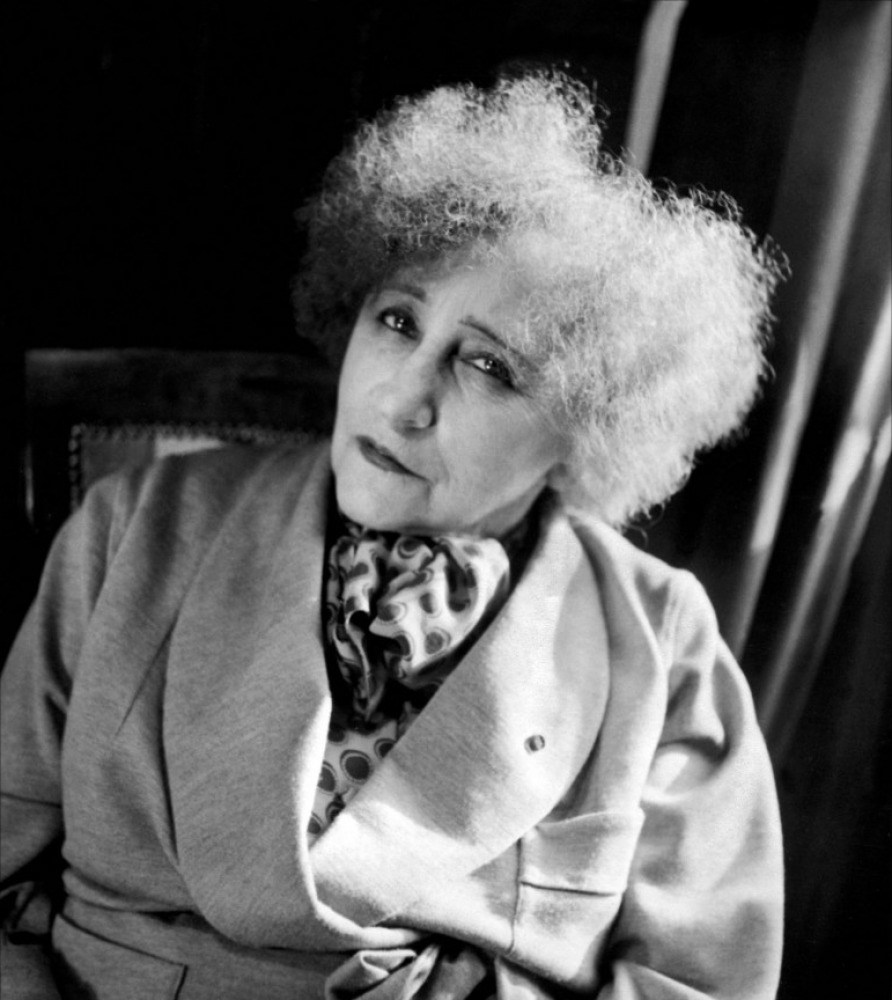
Quote du jour/Colette


You must not pity me because my sixtieth year finds me still astonished. To be astonished is one of the surest ways of not growing old too quickly.

Sidonie-Gabrielle Colette
(1873-1954)

Sunday, July 1, 2012

Endeavour on PBS tonight

I have read that early fans of Arthur Conan Doyle's Sherlock Holmes books believed Sherlock was a real person. And still tourists flock to Baker Street looking for the plaque with the famous address.


We fans of Inspector Morse, particularly the televised version based on the books by Colin Dexter, may be forgiven for feeling the same way about him. John Thaw made us believe that he was Morse, and it was all too eerie when he died a couple years after Morse died on the television episode, The Remorseful Day.

Morse and his partner, Robbie Lewis


In 2006, the wonderful Lewis, or Inspector Lewis as it is known in the US, debuted, with Lewis played by the original actor, Kevin Whately. It was all we could hope for. There were occasional homages to Morse, but mostly the series, with the addition of Lewis' partner Hathaway, played by Laurence Fox, has stood on its own. Sadly, I have read that the end may be near for the show. Season 5 will be on PBS from July 8 - July 29.


And tonight we have Endeavour, about Morse' early days as a policeman. An extra treat is that Thaw's daughter, Abigail has a role in tonight's episode.


And Colin Dexter, the man who began the whole thing, makes a cameo appearance.


Watch Endeavour Preview on PBS. See more from Masterpiece.

Saturday, June 30, 2012

The Canadian Book Challenge 6


I have signed up for the 6th Annual Canadian Book Challenge. You may find out more, and join here. My hope is to read a book from each province and territory, either set there or by an author from there.

Canada consists of 13 political divisions: 10 provinces and 3 territories. The territories are Northwest Territories, Nunavut and Yukon.
The major difference between a Canadian province and a Canadian territory is that a province is a creation of the Constitution Act (17 April 1982), while a territory is created by federal law. Thus, the federal government has more direct control over the territories, while provincial governments have many more competences and rights.


Alberta
British Columbia
Manitoba
New Brunswick
Newfoundland and Labrador
Northwest Territories
Nova Scotia
Nunavut
Ontario
Prince Edward Island - 1
Québec
Saskatchewan
Yukon

The Canadian Book Challenge is an online reading challenge in which participants from Canada and around the world aim to read and review 13 or more Canadian books in a one year span: Canada Day to Canada Day. Reviews must be posted online and participants are asked to share links to their reviews with other participants.

Canadian books can include any genre or form (picture books, poetry, novels, non-fiction, plays, anthologies, graphic novels, cookbooks, etc), can be written by Canadian authors (by birth or immigration) or about Canadians.
Book 1 finished August 5: Kilmeny of the Orchard by Lucy Maud Montgomery (Prince Edward Island)
Book 2 finished August 5: Out of Nova Scotia Gardens by Marie Nightingale

Friday, June 29, 2012

Daisy turns 30!


From The Friendly Beasts:

"I," said the donkey, shaggy and brown,
"I carried His mother up hill and down;
I carried her safely to Bethlehem town."
"I," said the donkey, shaggy and brown.


Five years ago, I wrote about the loss of our donkey, Juno. In the time since, our other donkey, Daisy has continued to go from strength to strength, as they say. She had gotten thin, and we were advised to begin feeding her a 'senior' donkey food. It has worked wonders. She is stocky and healthy. She runs down the hill when she knows Tom is letting the animals into the north pasture. She brays if she doesn't see 'her' sheep and goat, and goes off to find them. She turns a fierce eye on Piglet and Lexi when they come up the hill with Matt and Margaret.


I have an old yellowed article from The Wall Street Journal which begins 'Coyotes beware. Killer donkeys are on guard.' It goes on to say
Guard donkeys are no good for a bank or warehouse: they like people too much. But they're boffo [isn't that a great word?!] for protecting livestock. Sheepherding is a specialty because donkeys quickly identify with the herd, and they hate dogs, foxes, and coyotes - sheep's natural predators…
Donkeys do indeed love people. Daisy loves to walk right up to someone and nuzzle.


This is the way to feed donkeys or horses, with a flat hand, so they can't bite it. I brought out carrots to celebrate her big day.


Here is almost six-year-old Margaret, whose own 30th birthday is next month.


The bill of sale from July 5, 1988 - we bought them from a woman a few towns away

Wednesday, June 27, 2012

Word Pictures

There is so much going on outside that we cannot keep up. It is like being on vacation and not being able to see all the sights in a particular town, and with a broken camera. My camera isn't broken but there aren't any photos except in our heads. Well, that's not completely true because Tom did get a very blurry, faraway shot of a moose, but honestly not worth putting on the blog.

Moose you ask? Yes, and on the exact same day and place it showed up two years ago, the north pasture.

One early evening, we saw a doe lying down in that same pasture, in a little spot in the field with the woods just behind. We kept looking through the binoculars, and soon her head bowed down into her neck and she went to sleep. She was gone in the morning. Then two days later, she was there again early in the day. Also, lying down. After a while she got up. We saw her eating and she seems fine. I wonder if she might be pregnant. I read that when the babies are born, they lie still in the grass and are camouflaged. They have no smell for a while to further keep them safe. The miracle of nature.

We saw a doe and three fawns, all spotted, all gamboling in the north pasture again. Popular spot.

Matt and Margaret have seen one doe around their house; once right outside their sliding doors. And speaking of them, their ducks are now officially really free range. They walk around and swim wherever they want, and pretty much put themselves to bed. They'll also come right over to the sliders, waiting for a little handout. Lexi and Piglet pay them no mind. I tell the 'kids' they are animal whisperers.

After a time of relative quiet, the birds are very noisy, with babies crying for food and parents squawking at any intruders. When the red squirrel clambers up the maple, the bluejay mother fairly screeches at it. There seem to be a couple red squirrels around. A mating pair? Mother and child? Pals? And we also have a couple dear little chipmunks who scoot around the patio and terrace. We haven't seen the groundhog for ages. Maybe it is having babies or maybe it moved away. Only a few garter snakes have been sunning themselves on the steps. Maybe five at a time, down from a dozen other years.

The wild turkeys show up occasionally, in a small group or one singleton.

The swallows have flown the nest on the telephone pole. The phoebes have left their nest in the barn. The bluebirds continue to bring food so the babies must be in there. Same with robins and bluejays. Once in a while we see catbirds, goldfinches, and song sparrows flitting here and there.

In the barn, the chickens are laying lots of eggs. We sell as many as we get, and eat a few. We've found it kind of nice with a smaller crowd of animals since the sheep and goat died. We now have five sheep, one goat, and Daisy the donkey. She has a special day coming up on Friday, and I will make note of it here on the blog!

Tuesday, June 26, 2012

The loss of Nora Ephron

I am so very sorry that Nora Ephron has died. A few years ago I wrote about how much I enjoyed her literary company in a book report on I Feel Bad About My Neck.

The New York Times and The Huffington Post have published especially fine and heartfelt pieces. And if you go to this page at the NY Times, you'll find links to the many articles she has written.

Sunday, June 24, 2012

Things are cuckoo around here!

This morning there was a commotion out in the old apple tree. The bluejays and bluebirds were all upset. The cause was a new-to-us bird sitting on a branch. We looked it up, and lo and behold it was a black-billed cuckoo. We clapped our hands and it flew away, though not far. I think the birds were concerned because there are nests nearby. It didn't make the 'cuckoo' sound but the alternative sort of croaky sound that cuckoos make. This is the closest we found to the sound we heard.

I DID NOT take this wonderful photo, but found it here.


I'll leave you with a beautiful song in Middle English.

Friday, June 22, 2012

Fireflies! by Julie Brinckloe


33. Fireflies!
Story and pictures by Julie Brinckloe
children's book, 1985
finished 6/22/12


As I sit in the living room on these long evenings, I see fireflies outside every window. They seem like a miracle to me. How incredible that these little creatures bring such beauty to the night time sky. I was reminded of this book which I used to read to my children when they were little. It is the story of summer childhood. A child sees these wonders and captures them in a jar.

As in all the best children's picture books, there is such love portrayed between the parents and their son. This is the perfect book to read to your little ones on a summer evening to send them off to sleep. Or if you don't have young children at home, it is worth reading all by yourself, looking up occasionally at the fireflies in your own yard.


Thursday, June 21, 2012

Gladys Taber's Still Cove Popovers


This morning I was reading my Friends of Gladys Taber June newsletter when I came upon Gladys' popover recipe. It is from her 1972 My Own Cook Book. When I read this years ago, I copied out several recipes, the popovers among them, but I've never made them. Popovers are a wonderfully mysterious concoction. A few years ago I posted a recipe from Tara of the Books and Cooks blog. She doesn't write postings anymore but you may still read older ones. Hers worked the best of all we've ever tried. Gladys' are the same recipe, minus the melted butter, but the preparation is very easy and takes a very short time, so I thought why not try them and see how they measure up. Well, they were fantastic. I so love how Gladys' voice comes through in this recipe.

Gladys Taber's Still Cove Popovers

1 cup flour
1 cup milk
2 medium-sized eggs
1 teaspoon salt

Blend all ingredients well with a whisk or fork, but never mind if there are a few lumps! Fill greased custard cups 3/4 full and set them on a cookie sheet. This amount is enough for 6 cups. Turn oven on at 450º and bake 30 minutes.

Do not preheat the oven in this instance. Do not open the oven door, no matter how nervous you get. After 30 minutes, you may take a look, and prick the popovers lightly with a two-tined fork. Leave in the oven for 5 more minutes.


My notes: I whisked the eggs, added the milk, whisked some more. Sifted in the flour mixed with salt, and stirred well with a fork.
I used cooking spray to grease the cups.
We didn't have a 'two-tined fork' so were going to use the point of a sharp knife, but when the oven was opened, the popovers looked beautiful so out they came right then. Tom ate three, I ate two, and Sadie ate one. Excellent, delicious, quick, easy, perfect!

If you are interested in joining the Friends of Gladys Taber and getting a great newsletter four times a year filled with everything Gladys, you may email:

Linda Dunn
lrdunnATinfionline.net

Put FOGT in the subject line.

I've offered this before on the blog, but there are always new readers who may not have read it, and would like to join.

Incidentally, Still Cove is the name of Gladys' house on Cape Cod.

Wednesday, June 20, 2012

Quote du jour/Maitri Upanishad

As is one's thought, so one becomes.
Maitri Upanishad

More here, and here.

Monday, June 18, 2012

Chickens, Mules and Two Old Fools by Victoria Twead


28. Chickens, Mules and Two Old Fools
by Victoria Twead
nonfiction, 2009
fifth book for the Dewey Decimal Challenge 2012
seventh book for the Foodies Read 2 Challenge 2012
Nook book 8
finished 5/7/12


There are many forms of bravery, and one of them certainly must be to pull up stakes and move - not just to another house or even another town but to another country. And that's what Vicky and Joe Twead did. They weren't twenty or thirty or forty. They were 50 and 53 when they got the idea to move to Spain. The start of their adventure is a bit similar to the ladies in the fictional book, Enchanted April. They cannot stand the English weather anymore. They want sun instead of rain, blue sky instead of gray.

Only two and a half hours flight from London, guaranteed sunshine, friendly people and jaw-dropping views.

Here are some weather stats about the place where they chose to move.


Average temperature - El Hoyo (°C)

Jan Feb Mar Apr May Jun Jul Aug Sep Oct Nov Dec

7 8 11 13 17 25 27 27 22 16 10 7

Average rainfall - El Hoyo (mm)

Jan Feb Mar Apr May Jun Jul Aug Sep Oct Nov Dec

39 33 55 43 54 23 35 18 49 107 53 35


She describes El Hoyo thus:
Deep in the fold of the valley, the village houses huddled together, protected on all sides by the ancient slopes. It was just a cluster of houses, most very old, many derelict. Narrow streets separated the rows of houses. In the centre was the square, boasting shade-trees, seats and a fountain. The church was imposing and astonishingly pink.
A pink church!

What I loved was that they didn't choose a typical resort community with golf course, and myriad other retirees. They chose what might be called the 'real thing.' A genuine village, filled with Spanish people.

Victoria Twead is one of those wonderful authors who writes just as they must speak. Her words feel like they are spoken rather than written, and that she is sitting across from the reader just telling all these wonderful stories. She is very funny, and she makes situations sound like fun, even though I cannot imagine myself moving into a house that upon first visitation 'smells damp' and is 'so dark, even with the lights on.' There was a crack in the wall from an old earthquake. When they went upstairs, 'the cement steps were cracked and filthy.' The rooms had tiny windows, and there were beds with mildewed mattresses which housed beetles and spiders. Oh yuck, I shuddered. How could they do it? At first, they agree that they wouldn't live there for anything. But they unexpectedly found themselves becoming 'charmed' by the place. Whereas I would have run a mile, they were intrigued. Admittedly, they had bought and restored and sold a number of houses over the years, so they weren't strangers to hard work. But still. Live there?
Heart was fighting with Common Sense. It was a funny thing, but without warning, the house was growing on me. I found my mind churning with ideas for rooms. How to create a kitchen opening onto that walled garden. Perhaps have roof terraces to take in the stunning mountain views.
"Think of the work!" said Common Sense. "The place is a disaster!"
"Yes, but imagine how it could be… Imagine being part of this little village. Look at those views…" said Heart.
Common Sense gave up the fight. It didn't matter about frayed electric cables sticking out of walls like discarded spaghetti. Never mind the heaps of grit like dusty molehills in every room where the walls were forever disintegrating in avalanches.
Yes, I could see past all the decay. I could visualize this place as our home and project for the next five years, maybe longer. My heart hammered.
If you are like me and can't imagine taking on such a project, particularly in your fifties, do buy this book. Or if you think this is something you might want to do now, or sometime in the future, you'll so enjoy this book. It is pure delight. You will absorb Victoria's enthusiasm and her energy. She makes the reader feel like you too can do this! All things are possible and fun in the world of the Tweads. I loved the book, and have already bought the second one.

One of the many treats of Chickens, Mules and Two Old Fools are the recipes! Each chapter begins with one. It is done very nicely on the ebook. You can click it, read it, and then click to go back to the beginning of the chapter again. Also, the recipes are all listed in the table of contents under Spanish Recipe Index, before the first chapter, so it is very easy for the reader to find them. Here is one I want to try.

Crispy Potatoes in Spicy Tomato Sauce
Patatas Bravas

1 kg. (2 lb) potatoes, peeled, and cut into cm (1 in) cubes
1 small onion, finely chopped
2 cloves garlic, crushed
salt and freshly ground black pepper
500 g (1 lb) tomatoes
3 teaspoons paprika
1/4 teaspoon cayenne pepper
1/4 teaspoon chopped fresh thyme
1 teaspoon tomato puree
Olive oil, for frying
Chopped parsley to garnish

Par-boil the potatoes for 5-10 minutes.
Drain the water.
Let the steam evaporate for a minute or so and then give the pan a good shake. This roughs up the outsides nicely.
Set aside.
Prepare the tomatoes by cutting a cross in the base and plunging them into boiling water for 10-15 seconds.
Plunge into cold water and the skin should peel away easily.
Chop the tomatoes.
Fry the onion until soft.
Add the garlic, paprika, thyme and cayenne pepper, then cook for another couple of minutes.
Add the chopped tomato and puree and cook, uncovered, until the sauce thickens, about 20 minutes.
During cooking, add the salt and pepper to taste.
If the sauce seems too dry, add a little water.
Meanwhile, re-heat the frying oil and fry the potatoes until golden brown.
This gives them a crisp coating and prevents the sauce from soaking in too much.
They should be beautifully crisp outside and soft and fluffy inside.
To serve, place the potatoes in a serving bowl, then cover with the spicy sauce.
Sprinkle with chopped parsley.
Serves 4.

Sure sounds good to me!

Addendum: I should have mentioned that I first heard of the book here at Debbie's blog, ExUrbanis.

Addendum 2: In case you didn't see her comment, Victoria Twead now has her pictures on Pinterest:

Actually, the comments here have spurred me on to do something I've been meaning to do for ages. I've now made a Pinterest display board of all the pictures, and a few extras, that appear in 'Chickens' for readers who'd like to see the photos in colour.
Click here.

Here is Victoria telling a bit about her book.


Sunday, June 17, 2012

Strawberry Cobbler


This isn't a 'real' cobbler because the fruit isn't mixed into the batter. I chose to use this recipe as a shortcake. I heated up some strawberries with sugar, and poured them over the top of the split cobbler.

Strawberry Cobbler

2 cups flour
1 cup sugar
2 1/2 teaspoons baking powder
1/2 teaspoon salt

1 egg
2/3 cup milk or buttermilk
1 teaspoon vanilla
3 Tablespoons melted butter, cooled

Lots of strawberries

Preheat oven to 350º F.
Combine dry ingredients.
In a separate bowl, beat an egg, and stir in buttermilk, vanilla, and cooled butter.
Mix all ingredients and put into greased 7x11 pan. (8x8 would probably work, too)

Bake 35-40 minutes until top is firm.

This is a really wonderful June dessert. Heavenly, especially topped with whipped cream.

Friday, June 15, 2012

Janet Lennon's birthday

The Lawrence Welk show was a big part of my childhood. Every week my parents and I sat down to watch. Sometimes my parents would dance. To me, the Lennon Sisters were role models; gentle, kindly, and beautiful. Because Janet was only two years older than me, she was the one I was most drawn to. When I grew up and had little ones of my own, I was happy to discover that PBS offered reruns of the old show. Margaret and Michael loved it, just as I had. They still remember all of us piling onto the big bed at 7 o'clock on Saturday evenings.

On Janet Lennon's 66th birthday, I thought it would be fun to see an old clip of the Lennon Sisters, all of whom I am happy to say are still alive. Some still perform. Janet and Kathy have a wonderful doll business. Please go here to see a really nice video with them talking about it.

I love this song, and I love the way they sing it.

Thursday, June 14, 2012

Destination Unknown by Agatha Christie


30. Destination Unknown
by Agatha Christie
mystery, 1954
library book seven
Nook book 10
finished 5/24/12

I don't know why more agencies in real life don't do as Agatha did in this book. A young woman wants to kill herself. A spy fellow offers her a dangerous job. Since she wants to die anyway, why not do it in a way that may help the world? Hilary Craven's child has died, and her husband has left her. She is understandably at the edge of despair with nothing to live for and no will to go on. She accepts the reasonable offer, and changes her life in the process.

This book is yet another one that had me shaking my head in amazement at Agatha. The woman can go from writing about a sweet little lady in a garden to a thrilling espionage story worthy of Ian Fleming's James Bond tales.

The place Hilary ends up is in fact right out of a James Bond story. It is a compound in the Atlas Mountains, supposedly a leper colony.


The book also had a feel of The Prisoner, the old British tv show where life is seemingly perfect. All is taken care of. But no one can leave.

Another most satisfying book from Agatha Christie.

Tuesday, June 12, 2012

Today's poem by Dylan Thomas


Fern Hill


Now as I was young and easy under the apple boughs
About the lilting house and happy as the grass was green,
The night above the dingle starry,
Time let me hail and climb
Golden in the heydays of his eyes,
And honoured among wagons I was prince of the apple towns
And once below a time I lordly had the trees and leaves
Trail with daisies and barley
Down the rivers of the windfall light.

And as I was green and carefree, famous among the barns
About the happy yard and singing as the farm was home,
In the sun that is young once only,
Time let me play and be
Golden in the mercy of his means,
And green and golden I was huntsman and herdsman, the calves
Sang to my horn, the foxes on the hills barked clear and cold,
And the sabbath rang slowly
In the pebbles of the holy streams.

All the sun long it was running, it was lovely, the hay
Fields high as the house, the tunes from the chimneys, it was air
And playing, lovely and watery
And fire green as grass.
And nightly under the simple stars
As I rode to sleep the owls were bearing the farm away,
All the moon long I heard, blessed among stables, the nightjars
Flying with the ricks, and the horses
Flashing into the dark.

And then to awake, and the farm, like a wanderer white
With the dew, come back, the cock on his shoulder: it was all
Shining, it was Adam and maiden,
The sky gathered again
And the sun grew round that very day.
So it must have been after the birth of the simple light
In the first, spinning place, the spellbound horses walking warm
Out of the whinnying green stable
On to the fields of praise.

And honoured among foxes and pheasants by the gay house
Under the new made clouds and happy as the heart was long,
In the sun born over and over,
I ran my heedless ways,
My wishes raced through the house high hay
And nothing I cared, at my sky blue trades, that time allows
In all his tuneful turning so few and such morning songs
Before the children green and golden
Follow him out of grace,

Nothing I cared, in the lamb white days, that time would take me
Up to the swallow thronged loft by the shadow of my hand,
In the moon that is always rising,
Nor that riding to sleep
I should hear him fly with the high fields
And wake to the farm forever fled from the childless land.
Oh as I was young and easy in the mercy of his means,
Time held me green and dying
Though I sang in my chains like the sea.

Dylan Thomas (1914-1953)

Monday, June 11, 2012

Lunch in Paris by Elizabeth Bard

27. Lunch in Paris
by Elizabeth Bard
nonfiction, 2010
fourth book for the Dewey Decimal Challenge 2012
sixth book for the Foodies Read 2 Challenge 2012
library book five
Nook book 7
finished 5/1/12


I do love books set in France. I wrote of my great fondness for Joie de Vivre, and how much I enjoyed the Martin Walker books. I was enchanted by Rosy Thornton's Tapestry of Love. I enjoyed all of Peter Mayle's nonfiction, Harriet Welty Rochefort's French Toast and French Fried, Carol Drinkwater's The Olive Farm (and look forward to the others). I adore Hemingway's A Moveable Feast, and Janet Flanner's Paris Was Yesterday, and I own a shelf full of books about France.

When I read about Lunch in Paris here and here, I knew this was a book I wanted to read. I saw it was available through the state library's downloadable books so I read it on my Nook. I loved it so much that I bought a paperback copy because I wanted to own it, and look inside it. Ebooks are fine. I love the ease of handling at bedtime, but they will never, ever take the place in my heart of a paper book.

This book is not boring, not self-absorbed, not self-indulgent. I found the book and its author to be enchanting, appealing, and honest. She didn't try to make herself out to be this perfect person. It felt like she really is the woman she writes about, without façade.

The reader learns about France and the French right along with the author. No matter how much one is in love with a person and a country, we see that actually living in a new place takes commitment, time, and some serious work. The attitudes and the way different cultures view life take some getting used to. After an early conversation with her beloved Gwendal about future plans, Elizabeth Bard notes:
This American optimism cheered and puzzled him. He didn't understand my certainty. I didn't understand his hesitation. ...
In France, people often show their power by saying no - by their ability to block things, to show nothing happens without them. To close the store, if you like, whenever they please. In the United States, people show their power by their ability to say yes - to get things done in a hurry. To keep the store open an extra hour just for you.
And on the other hand:
He's a happy person and I am fundamentally suspicious of happy people. In the America I grew up in, little kids don't say, "When I grow up, I want to be happy." That's not the appropriate end to that sentence. We say, "When I grow up, I want to be a doctor, an astronaut, a fighter pilot." Happiness to me was something very abstract, the end of a long equation: initial self-worth multiplied by x accomplishments, divided by y dollars, z loans, minus f hours worked, plus g respect earned.
Reading this, I wondered how can I be so very French and so little American even though I've only spent one week of my whole life there? All I know is that even as a young girl I hated it when someone was described as their job. 'He's a teacher. She's a writer.' I would think, and even say aloud sometimes, 'No. You've told me what they do. How they earn their livings. But who are they? What do they think and feel and care about?'

Those of you who hate to exercise will take heart from this observation:
I've never met a French person with what an American would consider a "workout routine," I don't know anyone here who belongs to a gym. Our French friends might take a dance class or spend their holidays hiking in the Pyrenees, or bike to work or walk up four flights of stairs with their groceries. But nothing specifically designed to get your heart rate up to 462 beats per minute.
And more tidbits:
French women drink an extraordinary amount of H2O. ... never seen her within sight of a soda.

What was conspicuously absent from her bag were snacks. If an American family goes to the beach for the afternoon, chances are there's going to be a box of Fig Newtons in mom's tote, or at least money for a drippy ice cream cone. Nicole never eats between meals. She drinks wine at lunch; she usually has dessert or a square of dark chocolate with her coffee. Sometimes, when she sees patients till ten o'clock, she'll come down and grab a plain yogurt with a spoonful of jam. But she doesn't graze in the kitchen, ripping off a hunk of baguette before dinner. She doesn't pick while she cooks, popping one green bean into her mouth for every one she puts in the pot.
After describing a French meal, the author writes:
I thought of my mother's table, laden with seconds and thirds for everyone, all the dishes brought to the table at the same time. In the States, I could easily eat triple the amount that was now on my plate without considering if I was actually hungry. I looked at Nicole, spooning ratatouille, as bright as a summer garden, onto her plate. I made another mental note. If my calculations were correct, this was the main reason why, with no particular effort, I had not gained a single ounce since I moved to Paris. A French portion is half of an American portion, and a French meal takes twice as long to eat. You do the math. ... I had succeeded in tuning my body to the French routine; my inner gremlin was no longer screaming "Feed me!" I began to feel the slow fullness that comes from a light meal, lingered over for several hours. It was different from the stuffed turkey feeling I usually had at home.
Well, I came away from this book knowing that I live in the wrong place. I'll never get to move to France, but the characteristics I've noted are my characteristics.

On the NPR book site, Susan Jane Gilman writes of Elizabeth Bard:
Her observations about cultural differences are spot-on. She debunks both the romance of France and the glamour of expat life.
Exactly! And she does it in such a charming, fun, interesting book. I haven't even mentioned that there are recipes! Recipes which end each chapter, recipes that have a meaning connected to that chapter. Many of them are, as you might imagine, meat or fish based, but there are still some gems this vegetarian wants to try. Here is one:

Summer Ratatouille

I've been blessed with two ratatouille mentors: first Agnes, and now our friend Anne, who also comes from the south of France. Anne cuts her vegetables in good-sized chunks and is careful not to overcook them. The result should feel like a walk in your neighbor's garden, not a vegetable hash.
Anne's secret ingredient is a good pinch of saffron at the end, and "if the vegetables lack sunshine," a cube of sugar. I add the sugar anyway - because who couldn't use a little extra sunshine?

1/3 cup olive oil (don't skimp, you can't add more later)
2 1/2 pounds onions (7-8 medium), thickly sliced
1 1/2 pounds eggplant (2 small), cut into vertical chunks about 1/2 inch by 2 inches
1 1/2 pounds sweet peppers (3 small: 2 yellow, 1 red), seeded and sliced
1 pound zucchini (4 small), quartered the long way and cut into thirds
2 pounds sun-ripened tomatoes (6 medium), coarsely chopped, with their juice
5-6 sprigs thyme
2 good pinches saffron (1/8 teaspoon)
1 cube sugar (a scant teaspoon)

Warm the oil over medium heat in your largest frying pan. Add the onions. Sauté, stirring occasionally until they are wilted and just beginning to color (about 25 minutes). Don't skimp on the time here, as the onions need to sweeten; they provide the base for the whole dish.
Add the eggplant. Stir to coat. Sauté 10 minutes.
Add the peppers. You might need to lower the heat to maintain just a bit of sizzle. Sauté 10 minutes.
Add the tomatoes and fresh thyme. Heat until the tomatoes release some juice. Dissolve the saffron and sugar in the sauce. Cover. Cook for 10 minutes. Leave to cool.
Ratatouille tastes even better the next day. You can use it as a side dish, pasta sauce, filling for a quiche or an omelette, or over quinoa for a full vegetarian meal. It freezes beautifully, so make a few batches in the summer, before the tomatoes disappear.

Yield: serves 8.

Tip: Buy 2 smaller zucchini (or eggplant) instead of 1 large one. Smaller veggies have less water and a more concentrated flavor.


Lunch in Paris qualifies for two of my 2012 challenges.


Saturday, June 9, 2012

Race Drinks

I'm offering recipes for the signature drinks of the three spring horse races. Our friend Caryn joined us for each race and we had a wonderful time cheering on I'll Have Another, and then Union Rags after I'll Have Another was retired.

Kentucky Derby - Mint Julep

2 cups sugar
2 cups water
Sprigs of fresh mint
Crushed ice
Kentucky Whisky

Make a simple syrup by boiling sugar and water together for five minutes. Cool and place in a covered container with six or eight sprigs of fresh mint, then refrigerate overnight.

Make one julep at a time by filling a julep cup (or any glass you wish) with crushed ice (or ice cubes), adding one tablespoon mint syrup and two ounces of Early Times Kentucky Whisky.
Stir rapidly with a spoon to frost the outside of the cup. Garnish with a sprig of fresh mint.

Happily I had fresh mint in the terrace garden. I didn't take a picture of the finished drink, but here is the simple syrup.


Isn't it pretty? Tom used it for several days after the Derby. You have to take the words of Tom and Caryn for this since I don't like whisky/bourbon. They were wowed, and said it was terrific!


Preakness Stakes - Black-Eyed Susan

There were a few different variations but this is the one I made:

1 ounce vodka
1 ounce gold rum
1/2 ounce cointreau
3 ounces fresh orange juice
1 ounce pineapple juice - I used pineapple vodka so didn't add extra pineapple juice
juice of a lime


I did try this one, but only drank a bit. Way too sweet for me. I think I'm not a rum girl or an orange juice-in-a-cocktail girl. I made myself a cosmo. However, both Tom and Caryn thought it was divine.

And then we come to the Belmont Stakes. It seems the jury is still out on what to have as the one and only official drink. There have been three so far.

Belmont Breeze
The Belmont Breeze is the official drink of the Belmont Stakes. Created by New York's premiere beverage authority Dale DeGroff, the profile of the Belmont Breeze comes from the colonial recipe: one of sour, two of sweet, three of strong and four of weak.
The ingredients are:

1 1/2 ounces of a good American blended whiskey
3/4 ounces Harveys Bristol Cream Sherry
1/2 ounce of fresh lemon juice
1 ounce of simple syrup
(1 ounce of sweet and sour mix may be substituted for the lemon juice and simple syrup)
1 1/2 ounces fresh orange juice
1 1/2 ounces cranberry juice
1 ounce 7-Up
1 ounce Club Soda

Shake first six ingredients with ice, then top with 7-Up and club soda. Garnish with mint sprig and lemon wedge.

We put the nix on this one because of the sherry, and also, there are a lot of ingredients that we didn't think sounded particularly appealing all mixed together.

And then we have:

White Carnation (former official drink of the Belmont Stakes)
The White Carnation (vodka, peach schnapps, and orange juice) was the official drink of the Belmont Stakes until 1997 or 1998, when it was replaced by the Belmont Breeze. The carnation is the official flower of the Belmont Stakes, the third leg of racing’s triple crown that takes place each June in Belmont Park. The White Carnation hasn’t been missed by many; “the nigh undrinkable white carnation."
This sounded entirely too sweet to us, and Caryn felt a little squeamish about the peach schnapps, so I went searching for an alternative, and found the Belmont Jewel:
Horse racing and whiskey cocktails go hand-in-hand. With the third leg of horse racing's Triple Crown coming up soon, what better way to celebrate either at the track, at home or perhaps at an off track site than to sip the official cocktail of the Belmont Stakes? The Woodford Reserve Belmont Jewel is a quick and easy bourbon cocktail with pomegranate and lemonade and is sure to be a crowd pleaser.

1 1/2 oz Woodford Reserve bourbon
2 oz lemonade
1 oz pomegranate juice
lemon wedge or cherry for garnish


Because I'm so not a whisky fan, I made mine with Van Gogh pineapple vodka. The verdict on this drink was mixed. I think I liked it the most, though it was a little sweet for me. Caryn didn't like it at all, while Tom said it grew on him the more he drank. :<)

Oh, and for even more fun we drank the Belmont Jewel out of Red Solo Cups!


Have you heard Toby Keith sing this, or better still, seen the video?? And here's a history of the iconic cup.

Thursday, June 7, 2012

A wonderful little video on Dylan Thomas' Wales

I wish I could put this on the blog, but there is no way to embed it. Still, it is worth your while to go to the link and watch. Only around 4 minutes long, and oh, so lovely. You may find it here.

Wednesday, June 6, 2012

Today's poem by Mary Ursula Bethell

Time

‘Established’ is a good word, much used in garden books,
‘The plant, when established’ . . .
Oh, become established quickly, quickly, garden
For I am fugitive, I am very fugitive – – –

Those that come after me will gather these roses,
And watch, as I do now, the white wistaria
Burst, in the sunshine, from its pale green sheath.

Planned. Planted. Established. Then neglected,
Till at last the loiterer by the gate will wonder
At the old, old cottage, the old wooden cottage,
And say ‘One might build here, the view is glorious;
This must have been a pretty garden once.’

Mary Ursula Bethell (1874-1945)
From a Garden in the Antipodes, 1929


Monday, June 4, 2012

Today's song/Our House - Madness

What the Queen will hear tonight!

Wednesday, May 30, 2012

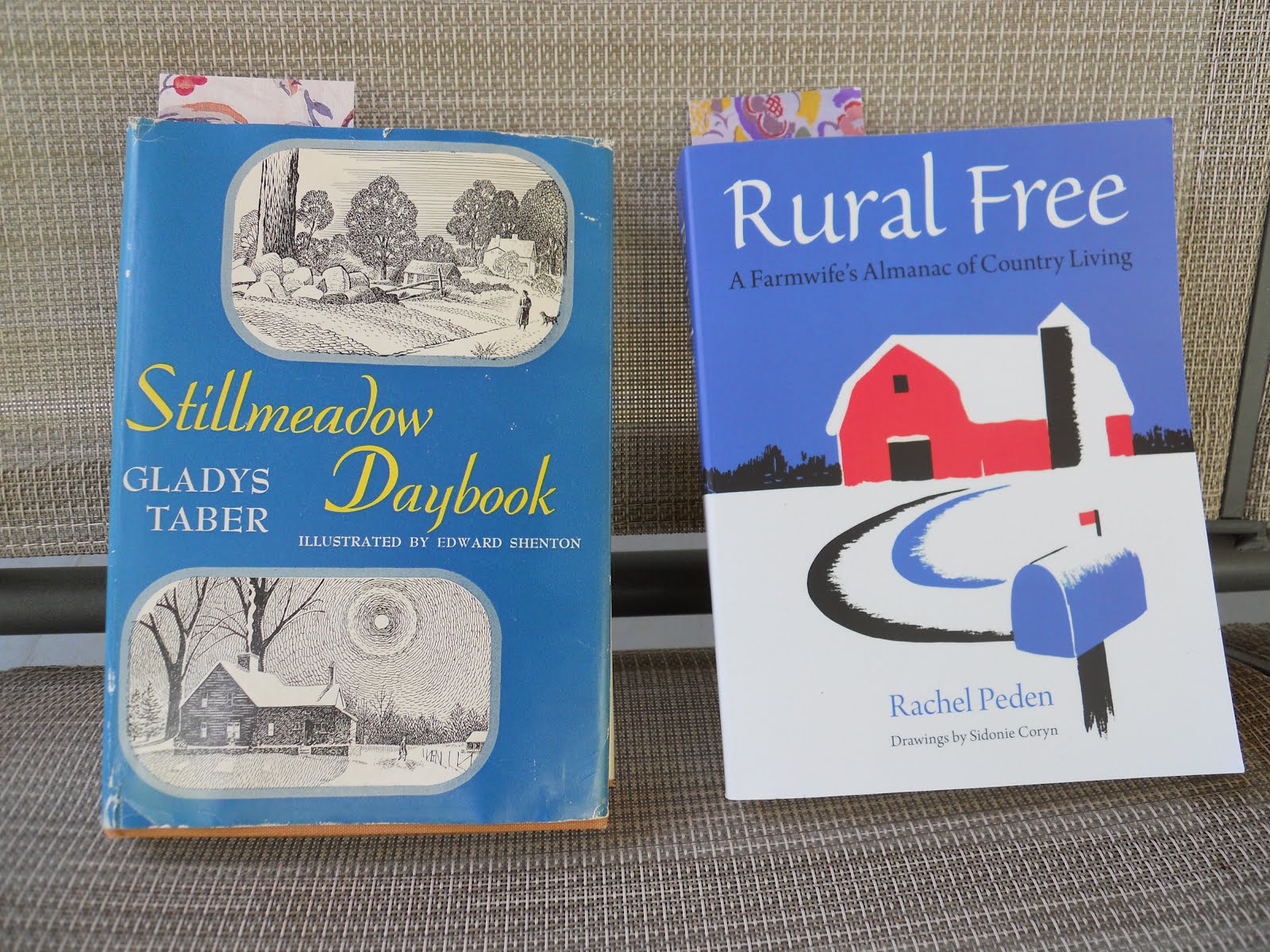
May with Gladys and Rachel


To learn more about this yearlong adventure with Gladys Taber and Rachel Peden, you may click 'A Year with Gladys and Rachel' - the first of my Letter Topics on the sidebar.

I smiled as I read Gladys' May entry, and thought how little we New Englanders have changed over the years. I wondered if we are by nature introspective because so much of our year is spent in seasons that are not conducive to outdoor activity. Of course we can engage in winter sports, though not that many of us do so. Mostly, we rush from car to house and gaze out the window at the beautiful, still winter scene. But come spring and we are possessed with being outdoors. This past weekend I was consumed with planting and weeding. I barely spoke. I hardly thought. I just dug and pulled with that strength and energy which comes only in May. Pretty much all Gladys talked about in this month was flowers. She begins by singing 'a small tune to myself as I watch Jill moving down the stretched string marking the row'
Plant this when maples are in bud,
And feel the magic in your blood,
Plant that when maples are in leaf,
And that's the END of winter grief!
Honestly, I am sure I can feel that 'magic' in my own blood.

Gladys writes of picking scallions and radishes, and 'the miracle has begun again!'
As I snip the tips of the first scallions, I am always feeling that one of the most hopeful things about mankind is that we go right on planting when the season comes, despite bombs, wars, world crises.
And that work, that physical, hard work, keeps our minds from ruminating too much on the bad in the world. We are focused in the best possible way. It is like caring for a young child, or a puppy, this tending of plants. We plant the seeds, we weed around them so they will grow up strong, we protect them as we are able, and with a lot of perseverance and luck, they turn into adult people or dogs or plants.

Gladys tells us that 'the atlas says we have a humid continental climate.'
That means, in my language, it rains too much here and it is damp. But how the growing things love it! Jill has to hoe out rhubarb now and then, it takes over like a giant tropical creature in a rain forest.

One of several rhubarb plants around here


While people in some parts of the world tend and nurture a single tree to get it to grow, we can't turn around without a new tree sprouting up. I've written before that the work our animals do for us is to keep the open pastures from turning into woods. A few years ago, Tom moved the pasture fence, and the whole area that used to be pasture is now full of trees. After the 1938 hurricane, Gladys and Jill set out
six small modest little pines, and now we can only get to the clothes dryer out back by hacking a path between the two most vigorous ones.
And this goes for certain flowers too.
The iris - ah, the iris! Jill moved and separated, moved and separated, gave away, moved and separated, and one desperate day flung her hands in the air and said, "I cannot take it." She dumped a basketful in the swamp, since when we have iris all over the edge of the swamp, and doing nicely.

My own ever expanding iris


Gladys expressed my very thoughts when she wrote
Rhubarb stalks grow tender and rosy and big all over our place.
And as I cut up the tender pieces for a pie, I think the first woman who kept house here must have done the same thing just about now. Maybe she had a pie cupboard and set her pies on the shelves, crisp and juicy from the great Dutch oven.
Everyone I know has a particular place in their hearts for lilacs, and Gladys waxes poetic as she writes of them.
My special love is the lilac. … I am sure heaven is bounded by a white picket fence that never needs repainting, and with lilacs always in bloom hanging deep clusters over it.
When the lilacs are in bloom and the apple blossoms and the white narcissus, New England is an experience in rapture. I love the lilacs too because they are a faithful flower, they grow around old blackened chimneys where houses once stood, they mark out abandoned gardens.
Gladys ends her month with
White lilacs in the moonlight, white fire of moonlight over blossoming apple trees, white little house under the great sugar maples - and Little Sister and Holly [dogs] waiting by the door - we are deep in spring!


And Rachel's words in her May chapter are also more focused on the natural world, which only goes to show that no matter where we live we may all feel the joy, the inexpressible sensations that only spring offers. Perhaps the very transience of the season, of May, makes our senses more acute. We can't miss a moment, for if we do, we have to wait a whole year to catch it again. She begins with a little trip to a neighbor's place.
His lane, through the woods, would be burgeoning with wild flowers now. It is a little lane, off a little road, off a slightly larger road.
Doesn't that just beckon to you? She goes on to list all she sees there, from ferns to mushrooms, and trillium to violets.

She writes of the apple blossoms.
So I came to the apple tree in the fencerow, now in full bloom. The sight thereof was like a blow, and it was necessary to sit down on a clovered terrace and rest from it. Bees had already discovered the glory of the tree: one bumblebee fumbled at a white blossom, and there were so many honeybees busy there that they made a stream of sound like the noise of distant, rushing water. … Nothing in the whole farmscape that morning could compete with the apple tree, neither the luscious pink of redbud in the woods nor the quiet splendor of raw gold on the tall, sprangly sassafras bushes further down the fencerow. It was as if they all stood ungrudgingly back that morning, letting all the attention be turned to the apple tree, giving it the full measure of its hour of glory.
There are seven paragraphs about a blue jay feather. I'm sure that many of us have picked one up and held it for a minute, thinking the blue was gorgeous and then we either dropped it back on the ground or kept it on a shelf for a while, perhaps never looking at it again. But Rachel really sees that feather.
The two halves of the feather are not identical, either in size, color, or angle. The narrower half is basically blue, cross-marked with short black hatchmarks. The wider part blends so subtly into black that one cannot possibly say, "right here is where the blue ends and the black begins." ...
The blue jay's feather has the texture, dry, luxurious sheen of taffeta. This taffeta is made up of a single layer of evenly placed strong fibers (properly called processes) laid side by side. Not one fiber overlaps another; yet normally there is no space between any two fibers - that would make a slit in the feather. You can pull them apart, but you can also run a finger along the taffeta, stretching it without pulling the fibers apart.
She writes,
Every year I think there never were so many maple seeds before, and every year it is true. This year it is spectacularly true.
She goes on to say that when they fall, the pods
brush the house walls with a dry papery whisper; or they strike each other in falling, with a soft, wooden clash. This is a dinner-bell sound to chipmunks. They bite off the hulls from the seeds and stuff their cheeks until they bulge from just below the eyes to just above the shoulders.
This got me thinking about two facts that I thought were unrelated, until reading this. On Saturday my friend Judi, whose garden I featured in my letters five years ago, was saying she has a lot of chipmunks in her yard. And I have noticed that this has been a 'spectacular' year for maple seeds. We have mini-maples all over the yard. It seems that they are connected after all. Maybe the chipmunks come when there is an abundance of food for them to eat. We have just two chipmunks but I'm thinking there may be a little family before too long.

One of the two. The other had just run past.


Rachel describes the baby starlings in nests.
If you bend above the nests and make even the sound of breathing, four enormous yellow-lined mouths fly open instantly, wide as a suitcase, in each nest.
There is a beautiful passage about a perfect day in May.
If a farm woman ever wondered why she wanted to live on a farm anyway, the answer is here today.
Today the tamarisk bush is a bowl of pink foam; the sweet shrub offers its dark red knots to be tied into a handkerchief for all-day fragrance. Lilacs lean toward the driveway, extending their purple and lilac clusters and reminding everyone that the end of the school year is near, with pomp and circumstance coming up at three levels of Commencements. From early morning until sunset newly opened leaves experiment with shadow patterns against the weathered boards of an old shed's wall. The air is as comforting as a cushion leaned back against.
Now little boys boast of the number and size of the snakes they have seen, and marbles and kites have long been forgotten. Fires have gone out in the farmhouses.
… It is a time of ambition greater than any possible fulfillment; of rapture beyond any reasonable, material reason. The joy of having lived to see this day is immeasurable. Some day next winter, when cold and mud and despair threaten to engulf her, let the farmwife remember this day.
I went out and found a few 'shadow patterns' on my own barn.


Before I close, I thought you might like to see maps of where Gladys and Rachel lived. Please do click to see more clearly.

Gladys' home in Southbury is in New Haven County just on the border of Fairfield County.


Indianapolis is just about in the center. Look down about an inch and find Bloomington. Rachel's farm was in nearby Ellettsville.


Gladys Taber lived from April 12, 1899 to March 11, 1980, and Rachel Peden lived from December 17, 1901 to August 16, 1975.


Well, this is it. It doesn't seem possible to me that a year has passed since I first wrote about my plan to read these two books, month by month.

These readings have greatly enriched my life. I have learned immeasurably from each woman. I now pay more attention. Even living a comparatively slow and quiet life, I do not see everything. I am looking more carefully now. I have also learned much animal and weather lore. But most importantly, I have gotten to know two intelligent, wonderful women.

And what comes now? I know that I want to continue this kind of reading.

My other two books by Rachel Peden are not divided by months or seasons so I think I'll read them separately. However, many of Gladys Taber's books are written in monthly or seasonal chapters.

This year winter begins at 6.12 am EST on December 21, the earliest arrival of winter since 1886. On that day I plan to begin reading two chapters called Winter from two books: Country Chronicle by Gladys Taber in Connecticut, USA and The Magic Apple Tree by Susan Hill in Oxfordshire, England; New England and old England. Each book is divided into four seasonal chapters. These two women, though not the same age, are writing within a few years of one another. Country Chronicle was published in 1974 and The Magic Apple Tree in 1982. Susan Hill was born on February 5, 1942 so she was 40 when The Magic Apple Tree was published. Gladys Taber was born on April 12, 1899 so she was 75 when Country Chronicle was published.

The last day of winter is March 19, 2013 so please stay tuned for a first posting around that date!